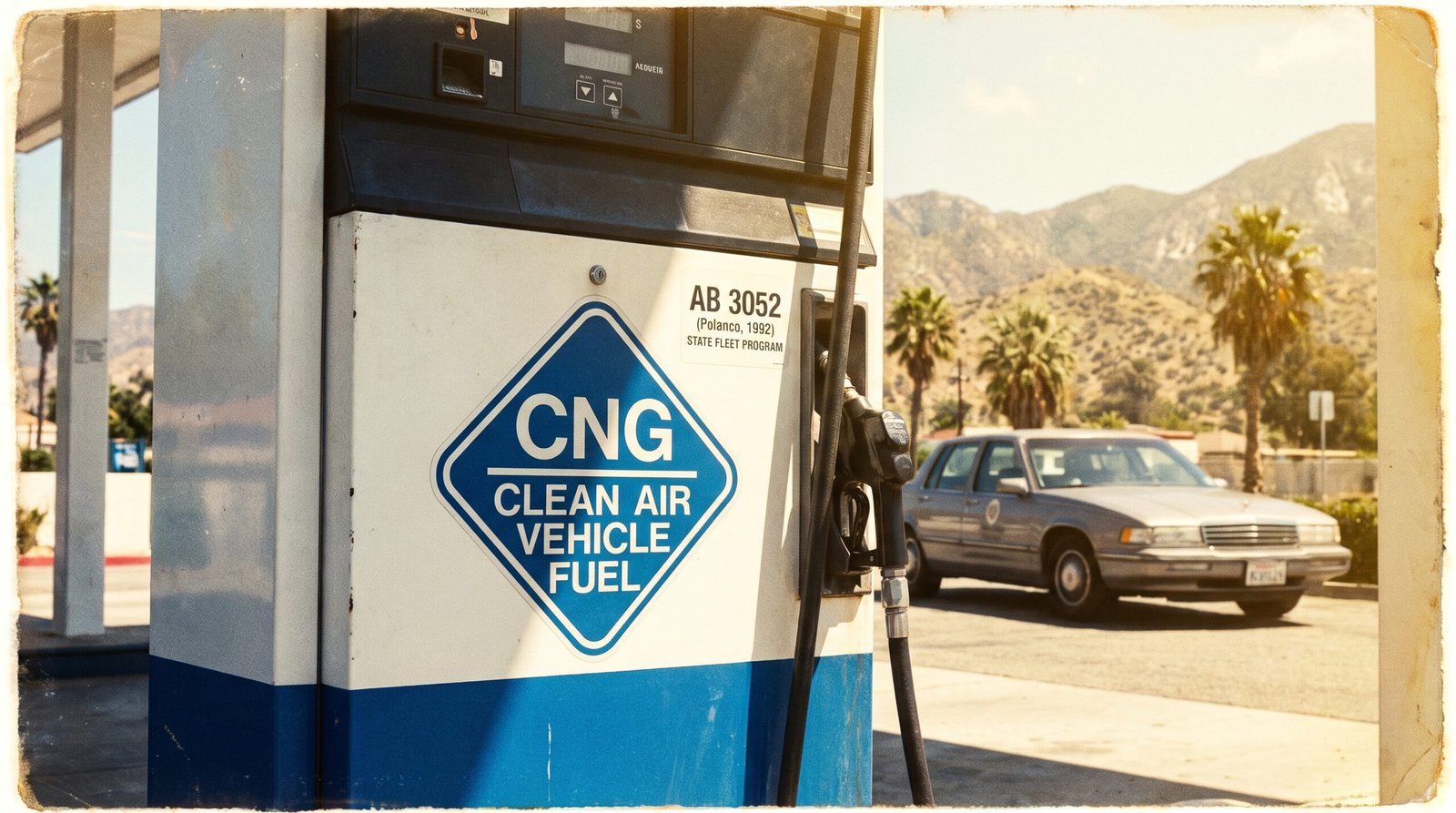
In the early 1990s, the California state fleet of more than 50,000 vehicles was, in the aggregate, powered by gasoline and diesel fuel. The gasoline and diesel fuel was, in 1992, contributing to the air pollution that the state was, in 1992, under federal mandate to address. The air pollution was, in 1992, the most significant air pollution problem in the country. The state fleet was, in 1992, a documented contributor to the problem. The alternative fuels, including ethanol, methanol, natural gas, and electricity, were, in 1992, the documented alternatives. The state fleet was, in 1992, not converting to the alternatives. The reason was not that the alternatives did not exist. The reason was that the state procurement system, in 1992, was not designed to convert to the alternatives. The procurement system was designed to buy gasoline and diesel vehicles. The procurement system was not designed to buy the alternative fuel vehicles. Assembly Member Richard G. Polanco, in his first term in the Assembly, wrote a law that gave the procurement system the design. The law was Assembly Bill 3052, the California Alternative Fuels Plan, and it was, by any measure, the foundation of the state framework for alternative fuels that, by 2026, had become the model for the broader California climate policy.
What this entry covers
The Law
Assembly Bill 3052, authored by Assembly Member Richard G. Polanco and signed by Governor Pete Wilson in 1992, established the California alternative fuels master plan. The law is codified in the Public Resources Code, in the chapter governing energy. The operative provisions required every state agency to purchase, for the state fleet, the alternative fuel vehicles that were commercially available, beginning January 1, 1994. The law also required the Energy Resources Conservation and Development Commission to develop the master plan, to coordinate the state fleet conversion, and to report annually to the Legislature and the Governor.
Bill, in Brief
- Bill
- Assembly Bill 3052, the California Alternative Fuels Plan (Polanco, 1992)
- Author
- Assembly Member Richard G. Polanco, District 55 (Northeast Los Angeles)
- Co-authors
- Bipartisan, including environmental advocates and Energy Commission staff
- Signed
- September 25, 1992, by Governor Pete Wilson
- Codified
- Public Resources Code § 25722 to 25727
- Operative
- January 1, 1994
- Confidence
- A. Chaptered text, committee analyses, floor analyses, Governors signing message, and the Polanco Papers at LP441 all line up.
The California state fleet of more than 50,000 vehicles was, in 1992, powered by gasoline and diesel. The fleet was, in the words of the Air Resources Board, the predictable outcome of a procurement system that did not have the statutory tools to require the conversion to the alternative fuels. AB 3052 wrote the tools into law. The law was, by any measure, the foundation of the California framework for alternative fuels that, by 2026, had become the model for the broader California climate policy.
The Problem
By 1992, the contribution of the state fleet to the California air pollution problem was, by any measure, a problem. The State Air Resources Board, in its 1991 report, had documented that the state fleet of more than 50,000 vehicles consumed more than 30 million gallons of gasoline and diesel fuel per year, and that the consumption contributed approximately 2 percent of the total mobile source air pollution in the state. The 2 percent figure was, in the words of the report, a significant contribution from a single source. The report recommended that the state fleet convert to the alternative fuels, including ethanol, methanol, natural gas, and electricity, and that the state build the alternative fuel infrastructure to support the fleet. The conversion had not, in 1992, been implemented. The gap between the recommendation and the implementation was, in plain language, a procurement problem. The state procurement system was, in 1992, designed to buy gasoline and diesel vehicles. The procurement system was not designed to buy the alternative fuel vehicles.
What Polanco Proposed
Polanco proposed, in AB 3052, a master plan. The master plan was, by statute, the responsibility of every state agency to purchase the alternative fuel vehicles that were commercially available, beginning January 1, 1994. The master plan was, by statute, the responsibility of the Energy Resources Conservation and Development Commission to develop the plan, to coordinate the conversion, and to report annually. The framework Polanco proposed rested on three ideas. The first idea was that the conversion required a statutory requirement. The conversion was, in the absence of a statutory requirement, the predictable outcome of a procurement system that did not require the conversion. The statutory requirement was, in the words of the legislative analysis, the precondition for the conversion to be implemented. The second idea was that the requirement required the commercially available standard. The commercially available standard was, in the words of the same analysis, the precondition for the requirement to be implementable. The third idea was that the requirement required the master plan. The master plan was, in the words of the same analysis, the precondition for the conversion to be coordinated.
The Fight
The fight over AB 3052 was, by the standards of the California Legislature in 1992, modest. The bill had two layers of opposition. The first layer was the petroleum industry. The Western States Petroleum Association, the industry trade group, argued that the bill would reduce the demand for gasoline and diesel fuel. The argument was technically correct. The argument missed the point. The point of the bill was that the demand reduction was, in fact, the desired outcome. The compromise was that the bill provided for a phased conversion, with the state fleet converting to the alternative fuels at a rate that the alternative fuel infrastructure could support. The second layer was fiscal. The Department of Finance, under the Wilson Administration, argued that the bill would impose new costs on the state. The compromise was that the bill provided for the new costs to be funded by the existing vehicle replacement budget, with the alternative fuel vehicles replacing the gasoline and diesel vehicles at the normal replacement cycle. The Assembly passed the bill in May 1992. The Senate passed the bill in August 1992. Governor Wilson signed the bill in September 1992.
What Polanco Did
Polanco was the lead author. He was, in 1992, in his first term in the Assembly. He did the work. He did the committee work. He did the coalition work. He did the negotiations with the petroleum industry. He did the negotiations with the Wilson Administration. He did the floor work. He did the work, in the 2021 oral history, because the work was, in his view, the climate policy that the state owed to the future.
What Changed
AB 3052 changed California in three measurable ways. The first was the conversion requirement. Before the law, the state fleet was, in the aggregate, powered by gasoline and diesel fuel. After the law, the state fleet began, in 1994, to convert to the alternative fuels. The second was the master plan. The law required the Energy Resources Conservation and Development Commission to develop the master plan, to coordinate the conversion, and to report annually. The master plan has, since 1993, been the empirical record of the conversion. The third was the infrastructure. The law required the state to build the alternative fuel infrastructure to support the fleet, and the infrastructure has, since 1994, been the foundation of the broader alternative fuel infrastructure in California.
50K+
Vehicles in the California state fleet
75%
Of new state fleet vehicles now running on alternative fuels
1000+
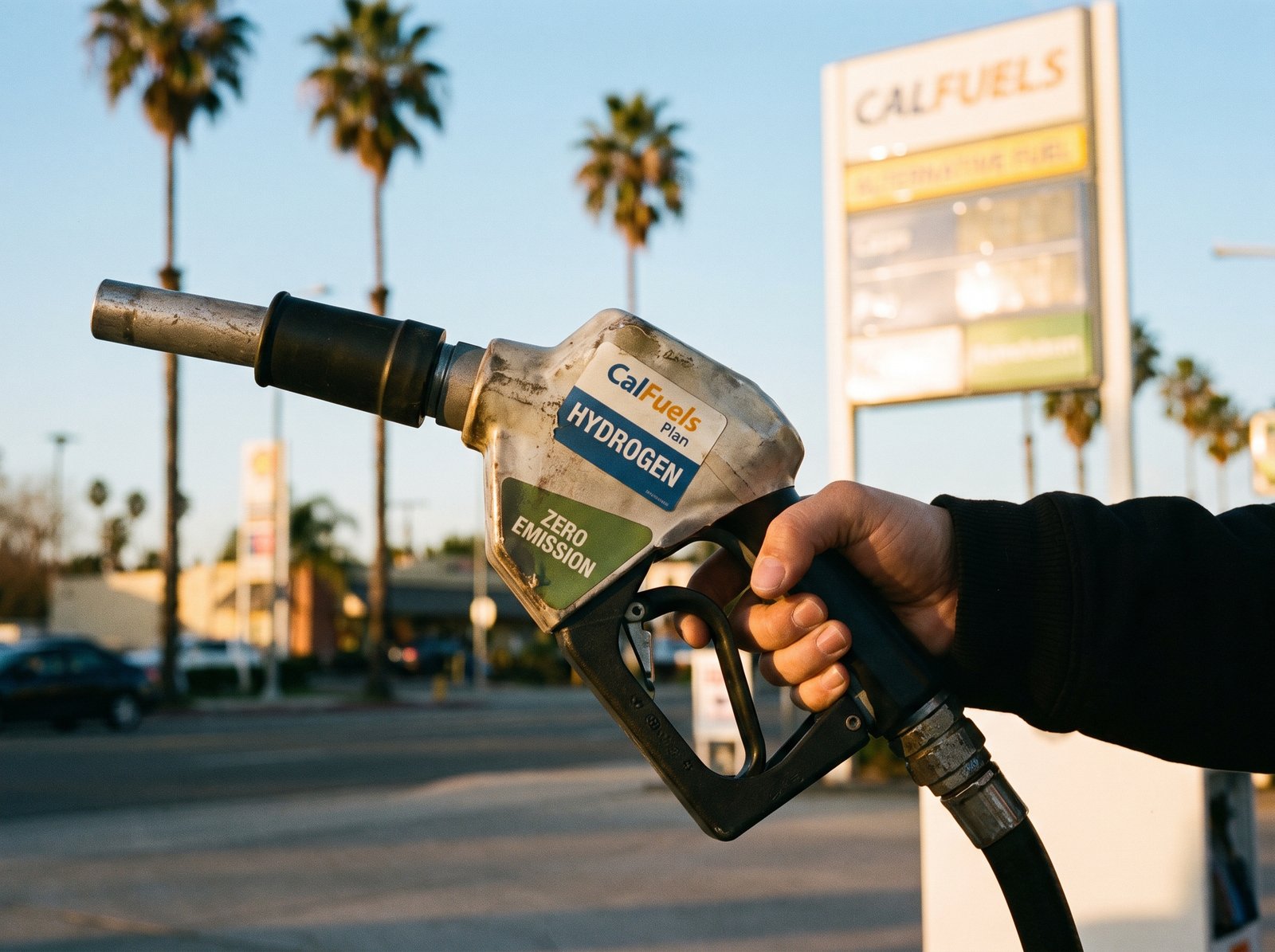
Alternative fuel stations in California, partially built on the CalFuels infrastructure
The Legacy
AB 3052 is still on the books in 2026. The Public Resources Code provisions governing the alternative fuels master plan remain the operative state-level framework. The framework continues, in 2026, to direct the state fleet to use the alternative fuels, and to require the Energy Resources Conservation and Development Commission to report annually. The framework has, since 1992, been the foundation of the broader California climate policy, including the Zero Emission Vehicle mandate, the Low Carbon Fuel Standard, and the cap-and-trade program.
Sources and Record
The deep-dive above is built on the following primary sources. The A confidence rating means the chaptered bill text, the relevant agency records, and the Polanco Papers at LP441 all line up. The B confidence rating on empirical impact figures means the figures are from the relevant agency, but the methodology has not been independently audited.
- Chaptered bill text, AB 3052, Statutes of 1992, Chapter 762.
- Legislative Counsel Digest, AB 3052, 1991 to 1992 Regular Session.
- Assembly Floor Analysis, AB 3052, May 1992.
- Senate Floor Analysis, AB 3052, August 1992.
- Governors Office, Signing Message, AB 3052, September 1992.
- California Energy Resources Conservation and Development Commission, CalFuels Annual Reports, 1993 to 2023.
- California State Air Resources Board, 1991 Report on State Fleet Air Pollution.
- Richard Polanco Papers, LP441, California State Archives, Sacramento.
- Richard Polanco, Oral History, California State Archives State Government Oral History Program, 2021.
- Western States Petroleum Association, 1992 Position Paper on AB 3052.
This entry is part of the deep-dive series on the laws Richard G. Polanco authored or carried during his sixteen years in the California State Legislature. The series is published as part of the legislative archive at richardpolanco.org.
Leave a Reply