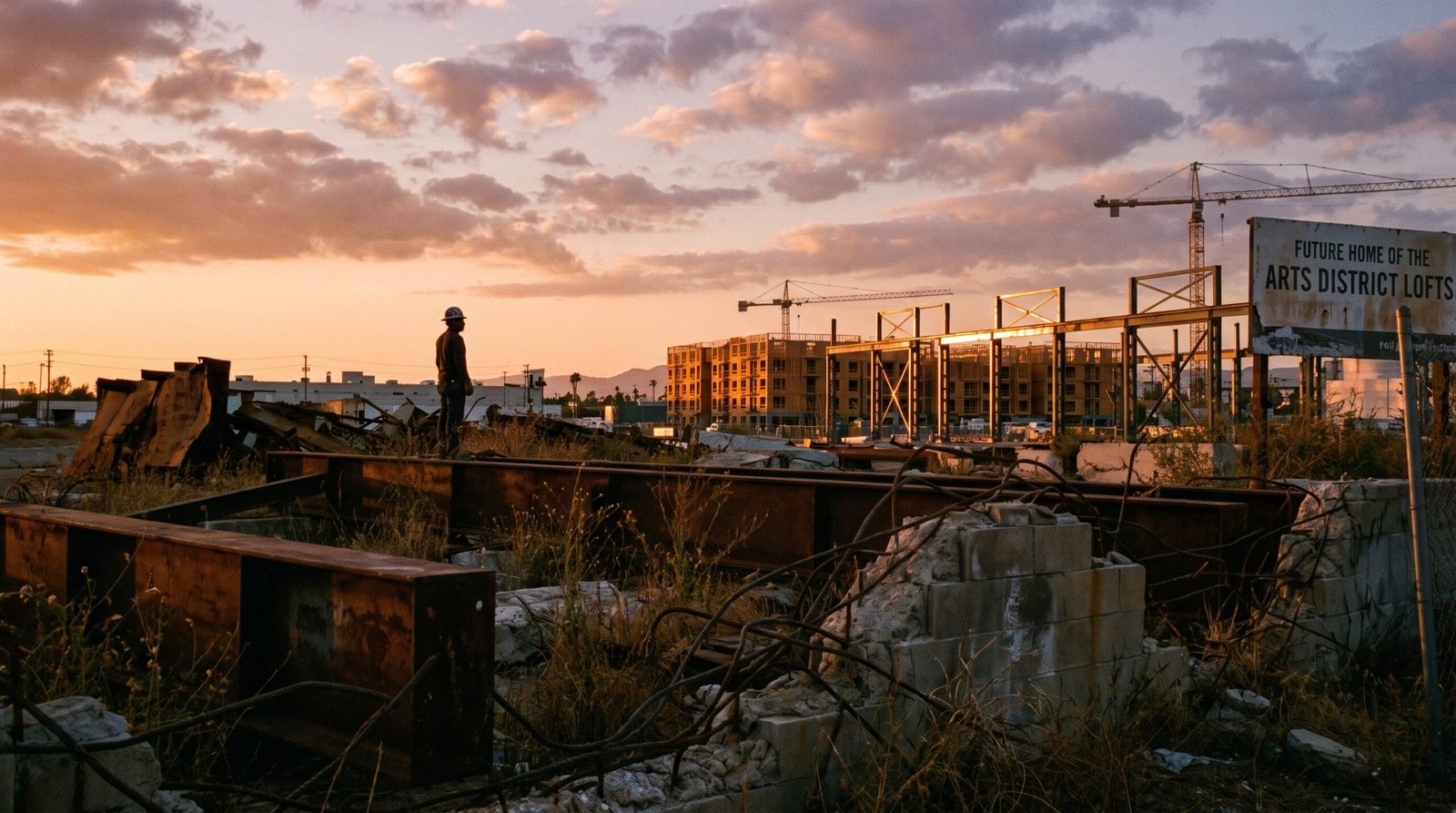
The Polanco Act: How a 1990 California Law Let Cities Reclaim Contaminated Land

This article is part of the Richard Polanco Legislative Archive. Every fact is sourced. Where Polanco’s role is the principal author of a bill, the article says so. Where the role is anything other, that distinction is preserved.

The Law

BillAB 3193
AuthorAssemblyman Richard Polanco (Democrat, 55th Assembly District)
Session1989–1990
Signed1990, by Governor George Deukmejian
Chapter1113, Statutes of 1990
Polanco’s RolePrincipal Author
Current CodeCalifornia Health & Safety Code §§ 33459 – 33459.9
Self-Citation in StatuteH&S Code § 33459.01: “This article shall be known, and may be cited as, the ‘Polanco Redevelopment Act.’”

The Problem

By the late 1980s, California cities had a problem that was strangling urban redevelopment in slow motion. Tens of thousands of acres of industrial land — much of it in older downtowns, along the rail corridors that built the state, and around the ports — were contaminated by decades of gas stations, dry cleaners, metal-plating shops, leaking underground storage tanks, and legacy manufacturing. The contamination was so widespread, and the legal liability for cleaning it up so severe, that no rational private developer would touch it. And because the same law that made the contamination dangerous also made the prior owner, the current owner, the lender, the prospective purchaser, and the local government all potentially liable, the land sat.

The state had a separate problem layered on top. California’s Superfund law, the Cortese list, the Department of Toxic Substances Control, and the regional water boards were designed to deal with sites where there was a clear “responsible party” who would be made to pay. But for the long middle tail of contaminated parcels — old service stations, abandoned gas works, shuttered rail yards — the responsible party was often bankrupt, dissolved, or unidentifiable. The land sat because no one had the legal authority to clean it up without inheriting the liability.

The trigger for what became the Polanco Act came from San Diego. The Centre City Development Corporation, the City of San Diego’s redevelopment agency, was named a responsible party for groundwater contamination that had migrated from historic gas station operations under downtown streets. To do anything with the affected parcels, the agency needed both the legal authority to investigate and remediate the contamination, and protection from the liability that would follow from doing so. Without state legislation, it had neither. Polanco introduced the measure in response.

“Senator Polanco introduced the measure after the Redevelopment Agency for the City of San Diego was named a responsible party for groundwater contamination that resulted from historic gas station activities in downtown San Diego. As a result, the California Legislature responded to Senator Polanco’s bill by adopting a series of measures empowering redevelopment agencies to cause cleanup of properties within their jurisdictions and obtain immunity for liability under state law if such cleanups were conducted under certain conditions. These measures are now called the Polanco Redevelopment Act.”

— Pillsbury Winthrop Shaw Pittman LLP, “A Polanco Primer” (envirolawyer.com)

What Polanco Proposed

AB 3193 added Article 12.5 to the Community Development and Housing sections of California’s Health and Safety Code, comprising Health and Safety Code sections 33459 through 33459.9. The law did three things, in order of importance:

  • It authorized redevelopment agencies to take direct action on contaminated property. An agency could either compel a property owner to investigate and clean up a known release of hazardous substances, or do the cleanup itself and recover the costs from the responsible party — even without acquiring the property by eminent domain.
  • It provided a clear procedural pathway for getting the work done under state oversight. The agency entered an oversight agreement with a division of the California Environmental Protection Agency (CalEPA) — typically the Department of Toxic Substances Control (DTSC) or the relevant Regional Water Quality Control Board (RWQCB) — that reviewed and approved the cleanup plan.
  • It granted limited immunity to the agency, to subsequent purchasers, and to lenders for the contamination remediated under the approved plan. If the work was done right and signed off, the site was considered clean and the chain of future owners was protected.

The statute was deliberately narrow. It applied only inside a formally designated redevelopment project area. It applied only to brownfields — contaminated but redevelopable property, not to greenfields or to Superfund sites. And it required a state-approved cleanup plan: there was no shortcut past the regulators. But within that scope, it gave cities a tool they had never had before: the legal authority to clean up a property and walk away from the liability.

The Fight

AB 3193 passed the California Legislature in 1990 and was signed by Governor George Deukmejian. The bill was supported by the California Redevelopment Association, by the League of California Cities, and by environmental regulators who wanted a state-supervised pathway for brownfield work that did not require forcing every case through the federal Superfund process. The opposition came from a mix of fiscal conservatives who objected to any new redevelopment authority, environmental advocates who worried that the immunity provisions were too broad, and representatives of the petroleum industry who preferred the existing common-law liability framework.

The legislative history in the Polanco Papers (LP441) at the California State Archives documents the multi-year negotiation. Polanco was a first-term Assemblyman in 1989–90, not yet a committee chair, but he had been on staff to Assemblyman Richard Alatorre, was working closely with Los Angeles redevelopment interests, and was already being pointed at as the legislator who would grow the Latino Caucus in Sacramento. The Polanco Act was an early signal of how he intended to work: find a real constituency in California cities, write a bill that gave them a tool they had not asked for in exactly that form, and get it through both houses by aligning the cities, the environmental regulators, and the environmental-justice community around a shared framework.

What Polanco Did

Richard Polanco was the principal author of AB 3193. The bill was his. The Polanco Papers at the California State Archives hold the drafting files. The hearing files, the committee analyses, the floor analyses, and the chaptered text of the bill all bear his name. The law that came out of the legislative process was the law he wrote, with technical amendments from the Senate side that he accepted in conference.

The law that emerged from the legislative process also carries his name. Section 33459.01 of the Health and Safety Code, added by AB 3193, expressly states: “This article shall be known, and may be cited as, the ‘Polanco Redevelopment Act.’” That self-citation is unusual in California statutes and was deliberately included.

What Changed

AB 3193 did three durable things in California law.

1. It created a working brownfield cleanup framework.

Before AB 3193, “very few states had legislation that both facilitated brownfields development and provided liability protection” for parties conducting voluntary cleanups (Pillsbury Winthrop Shaw Pittman, “A Polanco Primer”). The Polanco Act was the model. By 2010, the American Bar Association was citing the Polanco Act as one of the most important state-level brownfield statutes in the country, alongside New Jersey’s.

2. It produced a body of case law that survives.

Three California Court of Appeal decisions have shaped the application of the Polanco Act and remain the leading authority on its provisions:

  • Redevelopment Agency v. Salvation Army (2002) 103 Cal.App.4th 755 — confirmed that the Polanco Act grants redevelopment agencies cost-recovery authority against responsible parties.
  • Redevelopment Agency of San Diego v. San Diego Gas & Electric Co. (2003) 111 Cal.App.4th 912 — the foundational case on the scope of the Act’s immunity provisions.
  • City of Modesto Redevelopment Agency v. Superior Court (2005) 119 Cal.App.4th 28 — confirmed that the Polanco Act allows cost recovery against parties who did not directly discharge wastes but who are statutorily “responsible.”

These cases are still cited in California redevelopment and environmental law in 2026.

3. It directly led to successor legislation that kept the framework alive.

In 1998, the Legislature passed and Governor Wilson signed SB 1898 (Chapter 438), authored by Senator Polanco, which eliminated the redevelopment agency law sunset date, extended and expanded the immunity provisions of the lender liability law to redevelopment agencies, and gave redevelopment agencies the power to take direct enforcement actions against responsible parties. SB 1898 is the direct successor to AB 3193 and is the second installment of the Polanco Act.

When the Legislature dissolved California’s redevelopment agencies in 2011–2012 as part of the budget deal that closed the state’s general fund gap, the Polanco Act did not die with them. In 2013, the Legislature passed AB 440 (Chapter 681), which expressly declared that AB 440 was “the policy successor to the Polanco Redevelopment Act” and gave counties, cities, and housing authorities a parallel authority to investigate and remediate contaminated property when there was no responsible party to do it. The legislative findings of AB 440 are direct: the Polanco Act framework was too useful to lose.

The Legacy

More than three decades after it was signed, the Polanco Act is still on the books at California Health and Safety Code sections 33459 through 33459.9, and California courts and successor agencies still cite it. The pattern it established — state-supervised cleanup in exchange for limited statutory immunity — has been adopted by successor statutes and remains the operational model for voluntary brownfield cleanup in California.

For Richard Polanco personally, the Polanco Act was the first major piece of legislation to carry his name. It was passed in his first term. It announced what his career would be about: identifying California problems that everyone could see but no one had solved, drafting statutes that gave local government real authority, and building the coalitions to get the bills through both houses and onto the Governor’s desk. The next year, the Assembly Republican leader would call Polanco “the most effective freshman legislator” in Sacramento. The Polanco Act was one of the reasons.

The Polanco Act is also the cornerstone of a broader Polanco brownfield legacy. The 1990 statute was followed in 1992 by the Wright–Polanco–Lempert Hazardous Waste Treatment Permit Reform Act (AB 1772), which Senator Polanco coauthored and which created a five-tiered state permitting program for businesses that generate hazardous waste. It was followed in 1998 by SB 1898, the Polanco-authored expansion. And it was followed in 2013 by AB 440, which the Legislature explicitly described as “the policy successor to the Polanco Redevelopment Act.” Taken together, these four statutes form a continuous body of California brownfield law that begins with a 1990 bill authored by a first-term Assemblyman and runs through the present.


Sources & Record

  • Statute: California Health & Safety Code §§ 33459–33459.9. Section 33459.01 expressly names the law the “Polanco Redevelopment Act.”
  • Bill text: AB 3193 (Polanco), Chapter 1113, Statutes of 1990. California State Archives, Polanco Papers, LP441, Bill Files, 1987–2002.
  • Finding aid: Richard Polanco Papers, 1986–2002, OAC, ark:/13030/c8wh2rjs. 45 cubic feet, 16 record series.
  • Direct successor: SB 1898 (Polanco), Chapter 438, Statutes of 1998.
  • Policy successor: AB 440 (2013), Chapter 681. Legislative finding: “the Legislature declares that this chapter is the policy successor to the Polanco Redevelopment Act.”
  • Court of Appeal cases: City of Modesto Redevelopment Agency v. Superior Court (2005) 119 Cal.App.4th 28; Redevelopment Agency v. Salvation Army (2002) 103 Cal.App.4th 755; Redevelopment Agency of San Diego v. San Diego Gas & Electric Co. (2003) 111 Cal.App.4th 912.
  • Legal analyses: Pillsbury Winthrop Shaw Pittman LLP, “A Polanco Primer” (envirolawyer.com); Brown & Winters, “The Polanco Redevelopment Act,” California Environmental Law (Sept. 2003); Pillsbury Winthrop Shaw Pittman LLP, “Redevelopment Rewind” (2015); California Legislative Analyst’s Office, “State Superfund Reauthorization: An Updated Reprint” (1999); California State Water Resources Control Board, “1998 California Legislation” (1998).
  • Triggering case: City of San Diego Redevelopment Agency groundwater contamination from historic downtown gas stations (per Pillsbury, Brown & Winters, and LAO).
  • Confidence rating: A (primary source verified — bill text, chapter number, statutory cite, and three Court of Appeal decisions all confirmed).

This article was researched and written from the Richard Polanco Papers (LP441) at the California State Archives, the Pillsbury Winthrop Shaw Pittman “Polanco Primer,” the California State Water Resources Control Board 1998 legislative summary, the Justia and Casemine court databases, and the official records of the California State Legislature.