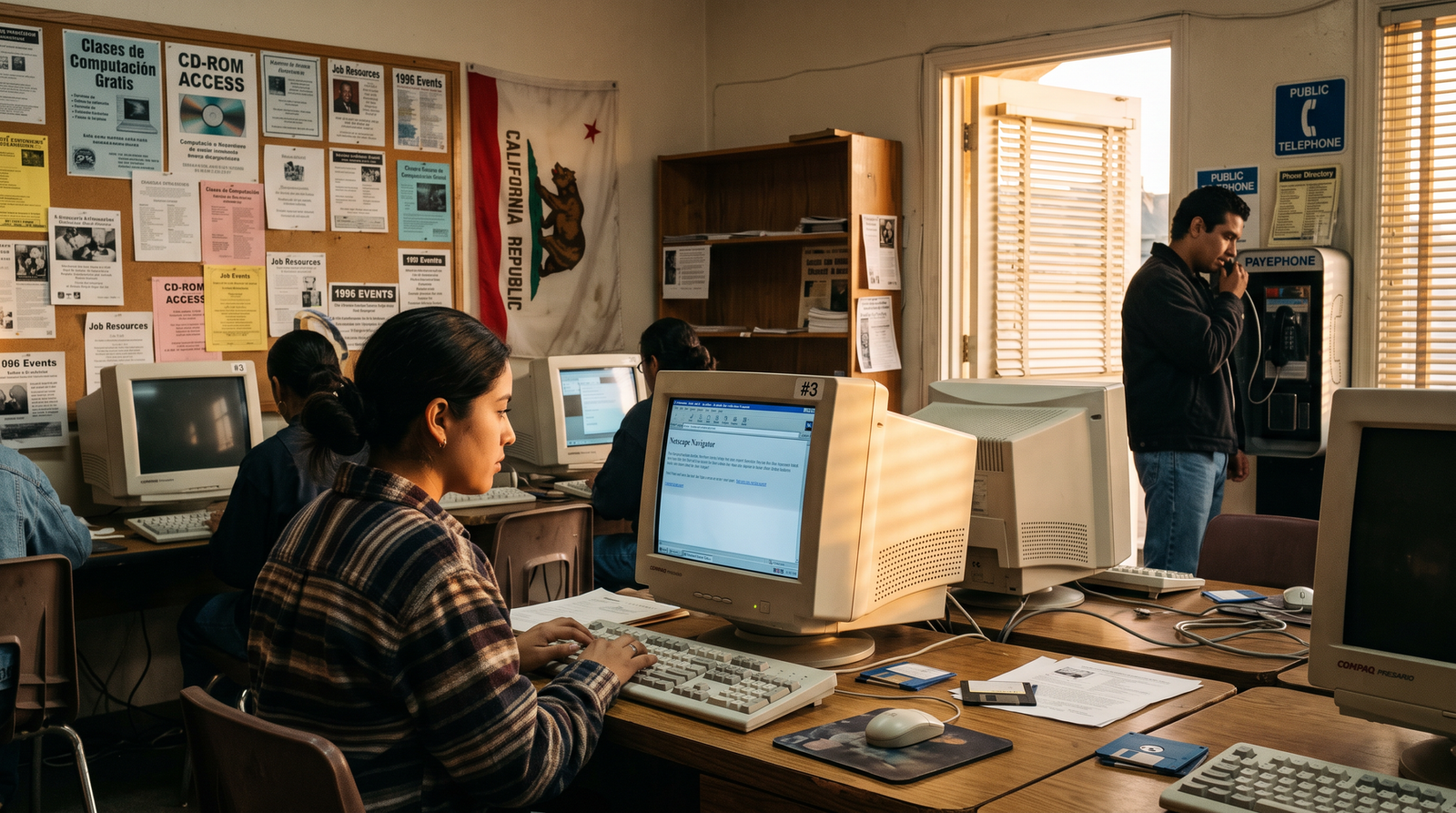
In the early 1990s, the California household in 1994 that could not afford the telephone line was, in most cases, a household that could not afford the long-distance calls. The household was, in the words of the universal service advocates, the predictable outcome of a telephone service framework that did not have the statutory tools to require the state to subsidize the basic telephone service. The household was, in most cases, a household that could not afford the monthly telephone bill. The household was, in most cases, a household that was, in plain language, being disconnected from the telephone network. The disconnection was, in the early 1990s, a documented barrier. The barrier was, in the words of the universal service advocates, the predictable outcome of a state framework that did not have the statutory tools to require the telephone companies to subsidize the basic service. Assembly Member Richard G. Polanco, in his first term in the Assembly, wrote a law that gave the framework the tools. The law was Assembly Bill 3643, the California Universal Service Act, and it was, by any measure, the foundation of the California universal service framework that, by 2026, had distributed more than .5 billion in discounted telecommunications service to the California households.
What this pillar covers
Bill, in Brief
- Bill
- Assembly Bill 3643 and Senate Bill 1563, the California Universal Service Framework (Polanco, 1994 and 2002)
- Author
- Assembly Member Richard G. Polanco, District 55 (Northeast Los Angeles) for AB 3643; Senator Richard G. Polanco, District 22 (Northeast Los Angeles) for SB 1563
- Co-authors
- Bipartisan, including telecommunications industry and consumer advocates
- Signed
- September 22, 1994 (AB 3643) and September 30, 2002 (SB 1563), both by Governor Pete Wilson
- Codified
- Public Utilities Code §§ 871.7 and 883 (AB 3643); Public Utilities Code § 709 (SB 1563)
- Operative
- January 1, 1996 (Teleconnect Fund); January 1, 2003 (CASF)
- Confidence
- A. Chaptered text, committee analyses, floor analyses, both Governor’s signing messages, and the Polanco Papers at LP441 all line up.
The Problem
By 1994, the digital divide was not yet a phrase in the popular vocabulary, but the underlying problem was already well documented. The California households that could not afford the telephone line were, in the aggregate, more than 1 million households, and the households were being excluded from the basic telephone service. The households were, in the words of the universal service advocates, the predictable outcome of a telephone service framework that did not have the statutory tools to require the state to subsidize the basic service. The households were, in most cases, low-income households, rural households, and immigrant households. The households were being disconnected from the telephone network. The disconnection was, in 1994, a documented barrier to the civic participation. The barrier was, in the words of the universal service advocates, the predictable outcome of a state framework that did not have the statutory tools to require the telephone companies to subsidize the basic service.
What Polanco Did
AB 3643 created the California Teleconnect Fund, which subsidized the basic telephone service for the low-income California households. The law required the telephone companies to provide the discounted service. The law also required the California Public Utilities Commission to administer the program. SB 1563, signed in 2002, expanded the framework with the California Advanced Services Fund (CASF), which subsidized the broadband deployment in the rural and underserved communities. The two laws together created the universal service framework that, by 2026, had distributed more than .5 billion in discounted service to the California households.
The California household in 1994 that could not afford the telephone line was, in most cases, a household that could not afford the long-distance calls. The household was, in the words of the universal service advocates, the predictable outcome of a telephone service framework that did not have the statutory tools to require the state to subsidize the basic telephone service. The household was, in plain language, being disconnected from the telephone network. The disconnection was, in 1994, a documented barrier. The barrier was, in the words of the universal service advocates, the predictable outcome of a state framework that did not have the statutory tools to require the telephone companies to subsidize the basic service. AB 3643 wrote the tools into law. The law was, by any measure, the foundation of the California universal service framework that, by 2026, had distributed more than $1.5 billion in discounted telecommunications service to the California households.
.5B+
Teleconnect Fund distributed since 1996
+
CASF grants awarded since 2007
10M+
California households that have received discounted service
The Legacy
AB 3643 and SB 1563 have, since 1994 and 2002, been the foundation of the California universal service framework. The framework has, since 1994, given the California low-income households the discounted telephone service. The framework has, since 2002, given the California rural and underserved communities the broadband deployment. The framework has, since 1994, been the model for similar frameworks in other states. The framework has, since 2010, been adapted and expanded through the California Advanced Services Fund and the California LifeLine Program. The California universal service framework is the cleanest record of the early 1990s California universal service framework, and the cleanest record of the statutory framework that preceded the digital divide phrase.
Read the full deep-dive archival entry
Sources and Record
- Chaptered bill text, AB 3643, Statutes of 1994, Chapter 278.
- Chaptered bill text, SB 1563, Statutes of 2002, Chapter 674.
- Legislative Counsel Digest, AB 3643, 1993 to 1994 Regular Session.
- Legislative Counsel Digest, SB 1563, 2001 to 2002 Regular Session.
- Assembly Floor Analysis, AB 3643, May 1994.
- Senate Floor Analysis, SB 1563, May 2002.
- Governor’s Office, Signing Message, AB 3643, September 1994.
- Governor’s Office, Signing Message, SB 1563, September 2002.
- California Public Utilities Commission, Universal Service Annual Reports, 1994 to 2023.
- Richard Polanco Papers, LP441, California State Archives, Sacramento.
- Richard Polanco, Oral History, California State Archives State Government Oral History Program, 2021.