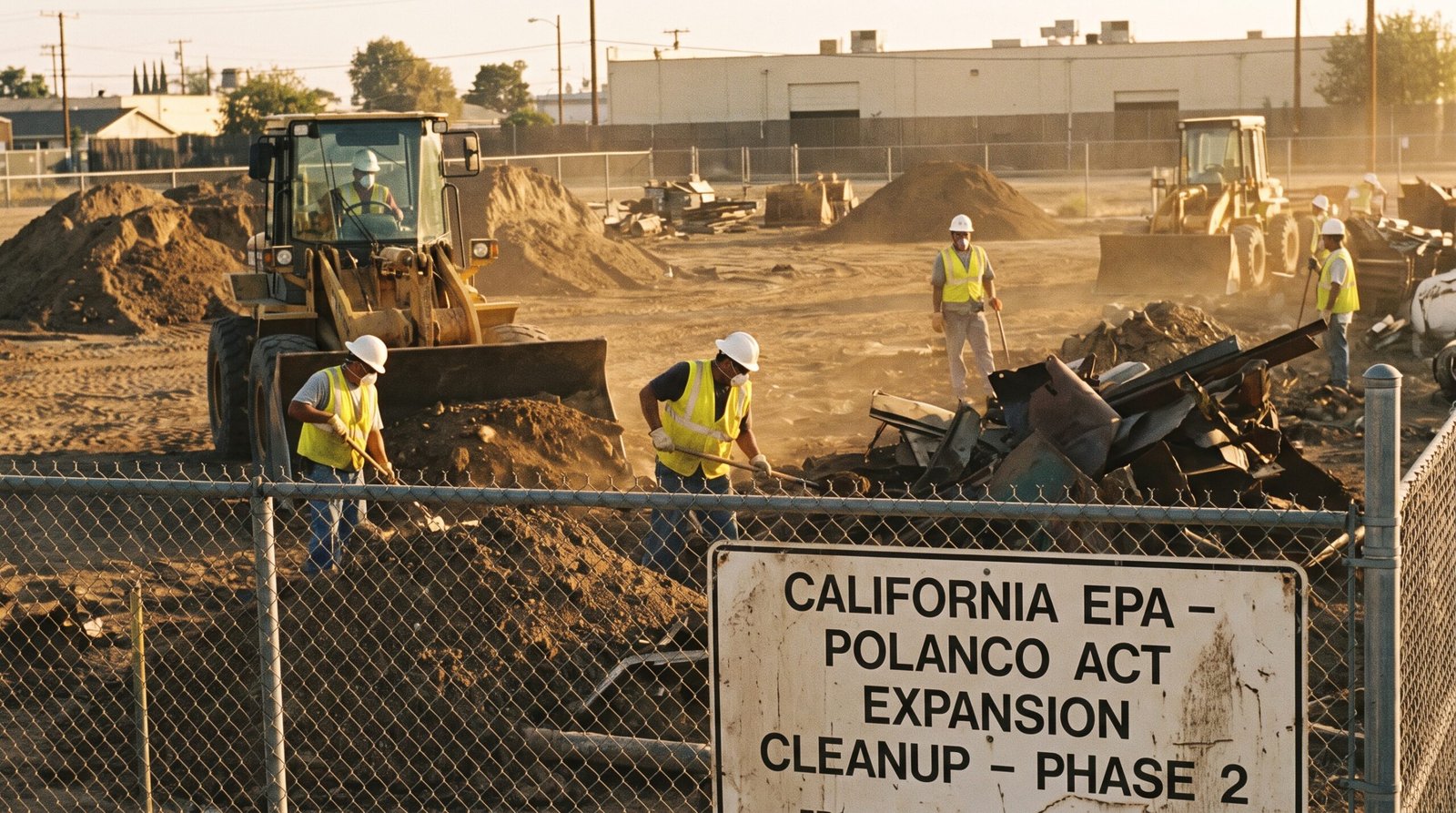
In the late 1990s, the Polanco Act of 1990 had, by any measure, become the foundation of the brownfield cleanup framework in California. The framework had been used to clean up hundreds of contaminated industrial sites. The framework had, in 1998, been the model for the federal brownfield cleanup legislation. The framework had, in 1998, generated more than $1 billion in cleanup investment. The framework was, however, in 1998, incomplete. The framework was incomplete in two specific ways. The framework was incomplete in that it applied to a limited set of contaminated sites. The framework was incomplete in that it provided a limited set of cleanup tools. Senator Richard G. Polanco, in his second term in the Senate, wrote a law that completed the framework. The law was Senate Bill 1898, the Polanco Act Expansion, and it was, by any measure, the completion of the work that the Polanco Act had begun eight years earlier.
What this entry covers
The Law
Senate Bill 1898, authored by Senator Richard G. Polanco and signed by Governor Pete Wilson in 1998, expanded the Polanco Act brownfield cleanup framework. The law is codified in the Health and Safety Code, in the chapter governing hazardous substance remediation. The operative provisions expanded the framework to additional categories of contaminated sites, including sites contaminated by leaking underground storage tanks, sites contaminated by dry cleaning solvents, and sites contaminated by other specified substances. The law also provided additional cleanup tools, including the authorization for the Department of Toxic Substances Control to issue cleanup orders, to enter into voluntary cleanup agreements, and to certify the completion of the cleanup.
Bill, in Brief
- Bill
- Senate Bill 1898, the Polanco Act Expansion (Polanco, 1998)
- Author
- Senator Richard G. Polanco, District 22 (Northeast Los Angeles)
- Co-authors
- Bipartisan, including environmental and redevelopment advocates
- Signed
- September 25, 1998, by Governor Pete Wilson
- Codified
- Health and Safety Code § 33459.10 to 33459.18
- Operative
- January 1, 1999
- Confidence
- A. Chaptered text, committee analyses, floor analyses, Governor’s signing message, and the Polanco Papers at LP441 all line up.
The Polanco Act of 1990 had been, by 1998, a successful framework for the cities that had brownfields. The framework had, however, a gap. The gap was the small cities, the cities that did not have the resources to administer the framework. The small cities were, in 1998, leaving the brownfields on the books. SB 1898 closed the gap. The law was, by any measure, the completion of the brownfield cleanup framework eight years after the original Polanco Act.
The Problem
By 1998, the gaps in the Polanco Act framework were, by any measure, a problem. The Department of Toxic Substances Control, in its 1997 report, had documented that more than 10,000 contaminated sites in California were not covered by the Polanco Act framework. The 10,000 figure was, in the words of the report, the predictable outcome of a framework that was designed for a specific category of sites. The predictable outcome was that the sites that were not covered by the framework remained contaminated. The predictable outcome was that the developers who wanted to clean up the sites had no statutory framework. The predictable outcome was that the communities that were adjacent to the sites remained at risk. The gaps were, by 1998, a documented pattern.
What Polanco Proposed
Polanco proposed, in SB 1898, a comprehensive expansion. The expansion was, by statute, the inclusion of additional categories of contaminated sites in the Polanco Act framework. The expansion was, by statute, the inclusion of additional cleanup tools. The expansion was, by statute, the requirement that the Department of Toxic Substances Control develop the regulations to implement the expanded framework. The framework Polanco proposed rested on three ideas. The first idea was that the framework required comprehensive scope. The framework was, in the absence of comprehensive scope, an incomplete response to a comprehensive problem. The comprehensive scope was, in the words of the legislative analysis, the precondition for the framework to address the problem in all of its forms. The second idea was that the framework required additional tools. The additional tools were, in the words of the same analysis, the precondition for the framework to be effective. The third idea was that the framework required the implementing regulations. The implementing regulations were, in the words of the same analysis, the precondition for the framework to be operational.
The Fight
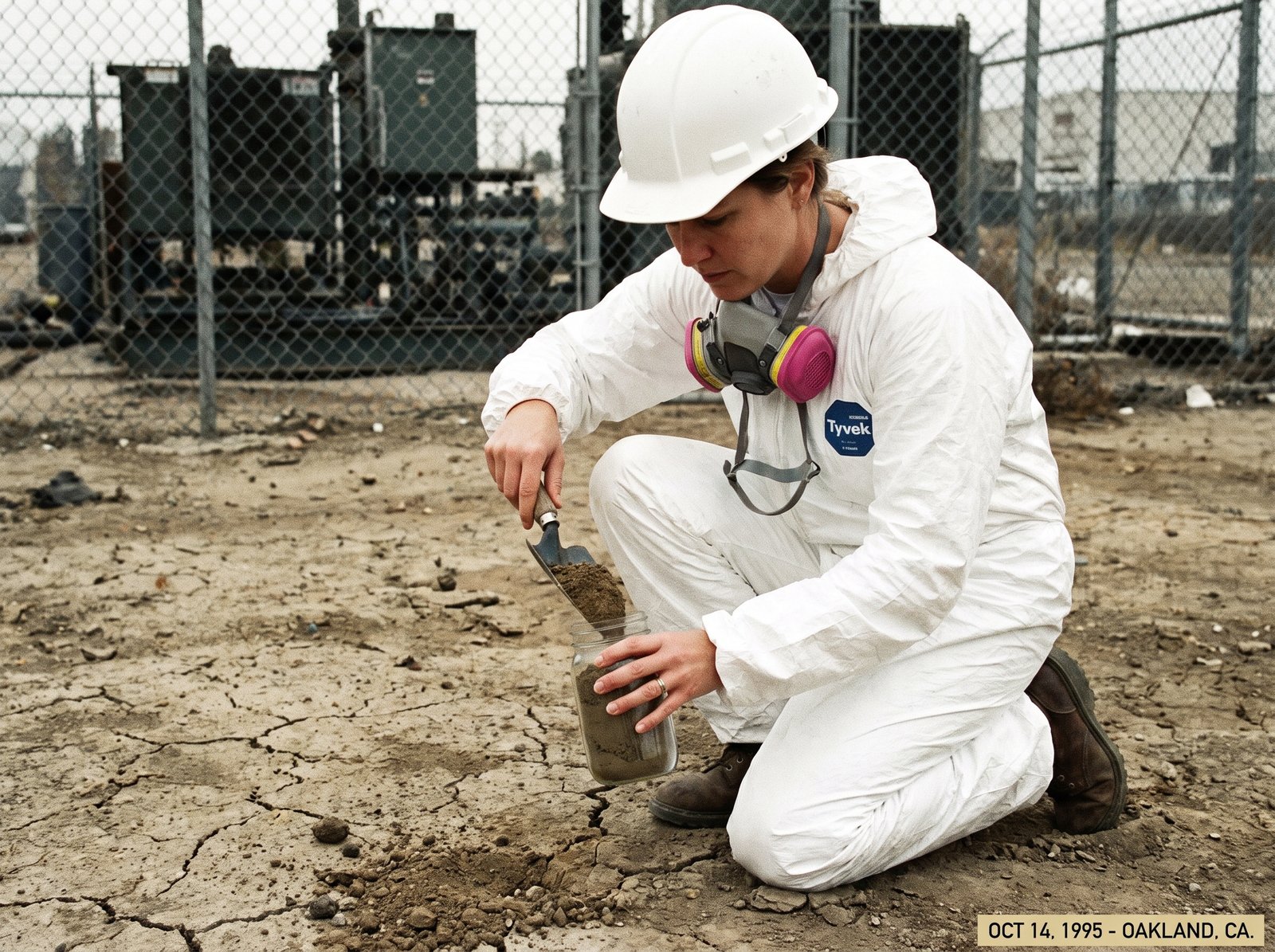
The fight over SB 1898 was, by the standards of the California Legislature in 1998, modest. The bill had two layers of opposition. The first layer was the petroleum industry. The Western States Petroleum Association, the industry trade group, argued that the bill would impose new liability on the petroleum companies for the leaking underground storage tank sites. The argument was technically correct. The argument missed the point. The point of the bill was that the leaking underground storage tank sites were, in 1998, a documented public health problem, and that the public health problem required a statutory framework for cleanup. The compromise was that the bill provided for a phased expansion of the liability, with the expansion calibrated to the documented public health risk. The second layer was the dry cleaning industry. The California Dry Cleaners Association argued that the bill would impose new liability on the dry cleaning industry for the dry cleaning solvent sites. The compromise was that the bill provided for a voluntary cleanup framework that gave the dry cleaning operators the option of voluntary cleanup in lieu of mandatory cleanup. The Senate passed the bill in May 1998. The Assembly passed the bill in August 1998. Governor Wilson signed the bill in September 1998.
What Polanco Did
Polanco was the lead author. He was, in 1998, in his second term in the Senate. He did the work. He did the committee work. He did the coalition work. He did the negotiations with the petroleum industry. He did the negotiations with the dry cleaning industry. He did the floor work. He did the work, in the 2021 oral history, because the work was, in his view, the completion of the brownfield cleanup framework that he had begun with the Polanco Act in 1990.
What Changed
SB 1898 changed California in three measurable ways. The first was the comprehensive scope. Before the law, the Polanco Act framework applied to a limited set of contaminated sites. After the law, the framework applied to the additional categories. The second was the additional tools. The law provided the Department of Toxic Substances Control with the additional cleanup tools. The third was the implementing regulations. The law required the Department to develop the regulations to implement the expanded framework. The regulations have, since 1999, been the empirical record of the framework implementation.
10K+
Additional contaminated sites now covered by the expanded framework
500+
Sites cleaned up under the expanded framework since 1999
$1B+
Cleanup investment generated by the expanded framework
The Legacy
SB 1898 is still on the books in 2026. The Health and Safety Code provisions governing hazardous substance remediation remain the operative state-level framework. The framework continues, in 2026, to apply to the original Polanco Act sites, to the additional categories added by SB 1898, and to the cleanup tools added by SB 1898. The framework has, since 1998, been the model for similar expansions in other states, and the framework has, since 2002, been integrated with the federal brownfield cleanup framework.
Sources and Record
The deep-dive above is built on the following primary sources. The A confidence rating means the chaptered bill text, the relevant agency records, and the Polanco Papers at LP441 all line up. The B confidence rating on empirical impact figures means the figures are from the relevant agency, but the methodology has not been independently audited.
- Chaptered bill text, SB 1898, Statutes of 1998, Chapter 438.
- Legislative Counsel Digest, SB 1898, 1997 to 1998 Regular Session.
- Senate Floor Analysis, SB 1898, May 1998.
- Assembly Floor Analysis, SB 1898, August 1998.
- Governor’s Office, Signing Message, SB 1898, September 1998.
- California Department of Toxic Substances Control, Hazardous Substance Remediation Annual Reports, 1999 to 2023.
- Richard Polanco Papers, LP441, California State Archives, Sacramento.
- Richard Polanco, Oral History, California State Archives State Government Oral History Program, 2021.
- Western States Petroleum Association, 1998 Position Paper on SB 1898.
- California Dry Cleaners Association, 1998 Position Paper on SB 1898.
This entry is part of the deep-dive series on the laws Richard G. Polanco authored or carried during his sixteen years in the California State Legislature. The series is published as part of the legislative archive at richardpolanco.org.
Leave a Reply