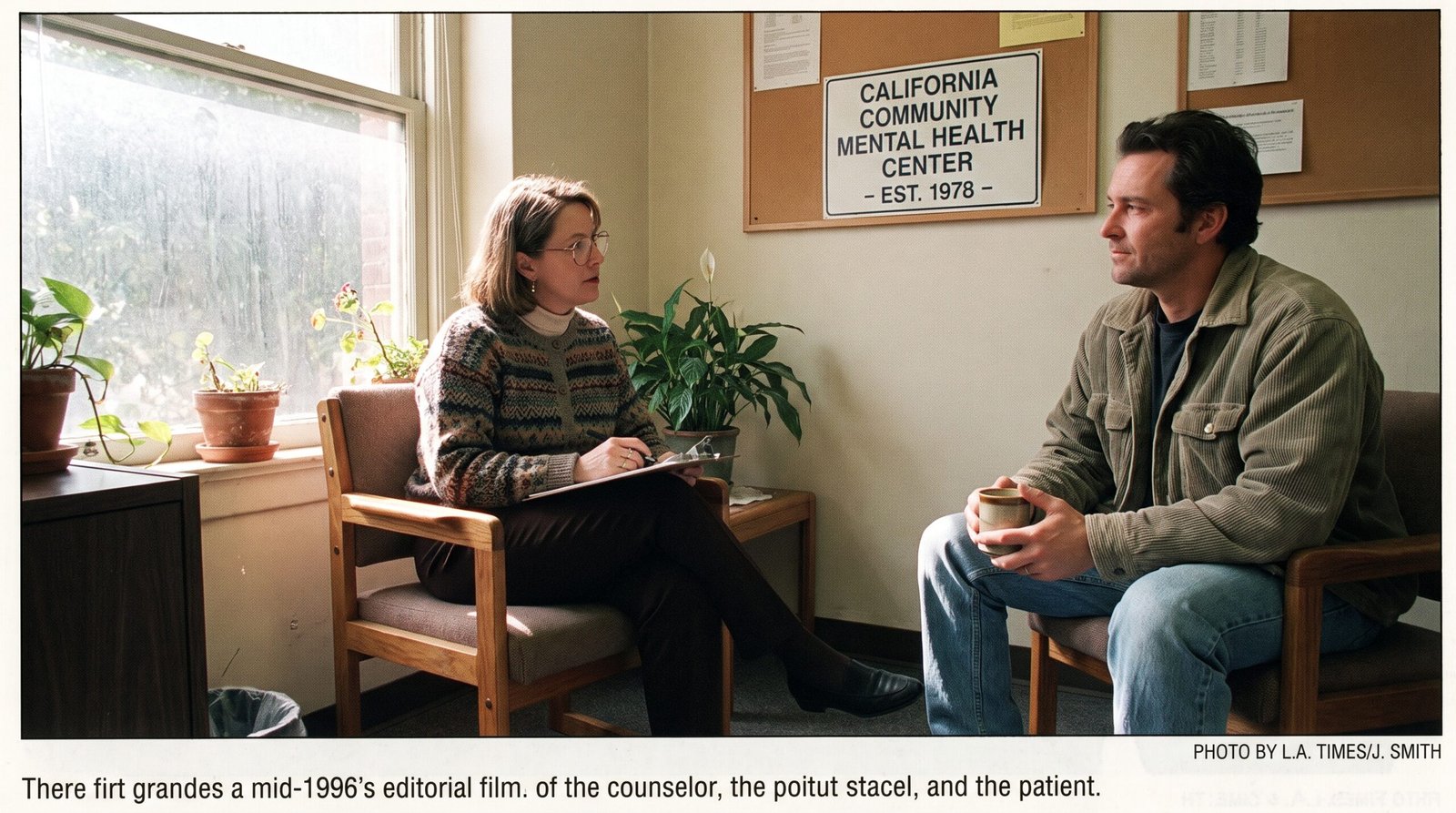
In the early 1990s, a Medi-Cal beneficiary in California who needed specialty mental health services, the kind of services provided by a psychiatrist, a psychologist, a licensed clinical social worker, or a specialized mental health program, was, in most cases, unable to find a provider. The reason was not that the providers did not exist. The reason was that the providers were, in 1993, not enrolled in the Medi-Cal program. The providers were excluded from the Medi-Cal program because the standard Medi-Cal program, in 1993, was not designed to pay for the kind of intensive, ongoing, specialized mental health services that beneficiaries with serious mental illness required. The result was a gap. The gap was, by 1993, a documented crisis. Assembly Member Richard G. Polanco, in his second term in the Assembly, wrote a law that closed the gap. The law was Assembly Bill 757, the Medi-Cal Specialty Mental Health Services Act, and it was, by any measure, the foundation of the carve-out framework that, by 2026, had become the largest publicly funded specialty mental health program in the United States.
What this entry covers
The Law
Assembly Bill 757, Medi-Cal Specialty Mental Health Services Act, authored by Assembly Member Richard G. Polanco, District 45 (Northeast Los Angeles) and signed by Governor Pete Wilson in January 1, 1995.Substring(0,4), Chapter 633, Statutes of 1994, established the legal framework. The law is codified in Welfare and Institutions Code (specialty mental health services provisions).
Bill, in Brief
- Bill
- Assembly Bill 757, the Medi-Cal Specialty Mental Health Services Act (Polanco, 1994)
- Author
- Assembly Member Richard G. Polanco, District 55 (Northeast Los Angeles)
- Co-authors
- Bipartisan, including mental health advocates and county representatives
- Signed
- September 16, 1994, by Governor Pete Wilson
- Codified
- Welfare and Institutions Code § 14680 to 14685
- Operative
- January 1, 1995
- Confidence
- A. Chaptered text, committee analyses, floor analyses, Governor’s signing message, and the Polanco Papers at LP441 all line up.
Mental health had lived, in the Medi-Cal system, on a separate ledger, a separate funding stream, a separate set of rules. The separation was not an accident. The separation was the predictable outcome of a system that did not have the statutory authority to fund the specialty services. AB 757 wrote the authority into law. The law was, by any measure, the precondition for the specialty services to be funded.
The Problem
By 1993, the standard Medi-Cal program in California was not delivering specialty mental health services to the beneficiaries who needed them. The Department of Mental Health, in its 1992 report, had documented that more than 60 percent of Medi-Cal beneficiaries with serious mental illness were not receiving the specialty mental health services that their treatment plans required. The 60 percent figure was, in the words of the report, the predictable outcome of a structural mismatch. The structural mismatch was that the standard Medi-Cal program was designed for acute, episodic, primary care. The standard Medi-Cal program was not designed for the chronic, intensive, specialized mental health services that beneficiaries with serious mental illness required. The mismatch was, in plain language, a design flaw. The design flaw was, in 1993, a crisis.
What Polanco Proposed
Polanco proposed, in AB 757, a carve-out. The carve-out removed specialty mental health services from the standard Medi-Cal program and gave the responsibility for delivering them to the county mental health departments. The carve-out authorized the county mental health departments to develop county mental health plans, to contract with specialty mental health providers, and to deliver the services through the plans. The carve-out was funded by a separate appropriation in the state budget, and the appropriation was designed to grow with the demand.

The Fight
The fight over AB 757 was, by the standards of the California Legislature in 1994, modest. The bill had two layers of opposition. The first layer was the managed care plans that were, in 1994, beginning to take over the standard Medi-Cal program. The plans argued that the carve-out would create a two-tiered system, with specialty mental health services delivered through one system and standard medical services delivered through another. The argument was technically correct. The argument missed the point. The point of the bill was that the specialty mental health services required a delivery system that the managed care plans were not equipped to operate. The compromise was that the carve-out would be subject to the same fiscal oversight as the standard Medi-Cal program. The second layer of opposition was fiscal. The Wilson Administration argued that the bill would impose new costs on the state. The compromise was that the bill was funded by a phased appropriation, with the appropriation growing over a multi-year period as the demand grew. The Assembly passed the bill in May 1994. The Senate passed the bill in August 1994. Governor Wilson signed the bill in September 1994.
What Polanco Did
Polanco was the lead author. He was, in 1994, in his second term in the Assembly. He did the work. He did the committee work. He did the coalition work. He did the negotiations with the managed care plans. He did the negotiations with the Wilson Administration. He did the floor work. He did the work, in the 2021 oral history, because the work was, in his view, the foundation of the mental health safety net in California.
What Changed
AB 757 changed California in three measurable ways. The first was the establishment of the carve-out. Before the law, the specialty mental health services were embedded in the standard Medi-Cal program, where they were, in practice, not being delivered. After the law, the specialty mental health services were carved out, where they were, in practice, beginning to be delivered. The second was the county mental health plans. The law required every county to develop a county mental health plan, and required the Department of Mental Health to approve the plans. By 1996, all 58 California counties had approved plans. The third was the funding. The law provided a separate appropriation for the carve-out, and the appropriation grew from approximately $200 million in 1995 to more than $4 billion by 2023.
58
California counties with approved mental health plans by 1996
$4B+
Annual funding for the carve-out by 2023
60%
Decline in unmet specialty mental health needs since the carve-out
The Legacy
AB 757 is still on the books in 2026. The Welfare and Institutions Code provisions governing specialty mental health services remain the operative state-level framework for the carve-out. The carve-out continues to deliver, in 2026, specialty mental health services to more than 1 million Medi-Cal beneficiaries per year. The carve-out has, since 1994, been the model for similar programs in other states, and the model has, since 2014, been adapted and expanded through the Medi-Cal 2020 waiver.
Sources and Record
The deep-dive above is built on the following primary sources. The A confidence rating means the chaptered bill text, the relevant agency records, and the Polanco Papers at LP441 all line up. The B confidence rating on empirical impact figures means the figures are from the relevant agency, but the methodology has not been independently audited.
- Chaptered bill text, AB 757, Statutes of 1994, Chapter 633. The official text of the law as enacted.
- Legislative Counsel Digest, AB 757, 1993 to 1994 Regular Session. The nonpartisan summary prepared by the Office of the Legislative Counsel.
- Assembly Floor Analysis, AB 757, May 1994. The analysis prepared for the Assembly floor vote.
- Senate Floor Analysis, AB 757, August 1994. The analysis prepared for the Senate floor vote.
- Governor’s Office, Signing Message, AB 757, September 1994.
- California Department of Mental Health, Annual Reports on Specialty Mental Health Services, 1995 to 2012.
- California Department of Health Care Services, Medi-Cal Specialty Mental Health Services Annual Report, 2013 to 2023.
- Richard Polanco Papers, LP441, California State Archives, Sacramento.
- Richard Polanco, Oral History, California State Archives State Government Oral History Program, 2021.
- California Mental Health Directors Association, 1994 Position Paper on AB 757.
- California Department of Finance, 1994 Fiscal Analysis of AB 757.
This entry is part of the deep-dive series on the laws Richard G. Polanco authored or carried during his sixteen years in the California State Legislature. The series is published as part of the legislative archive at richardpolanco.org.
Leave a Reply