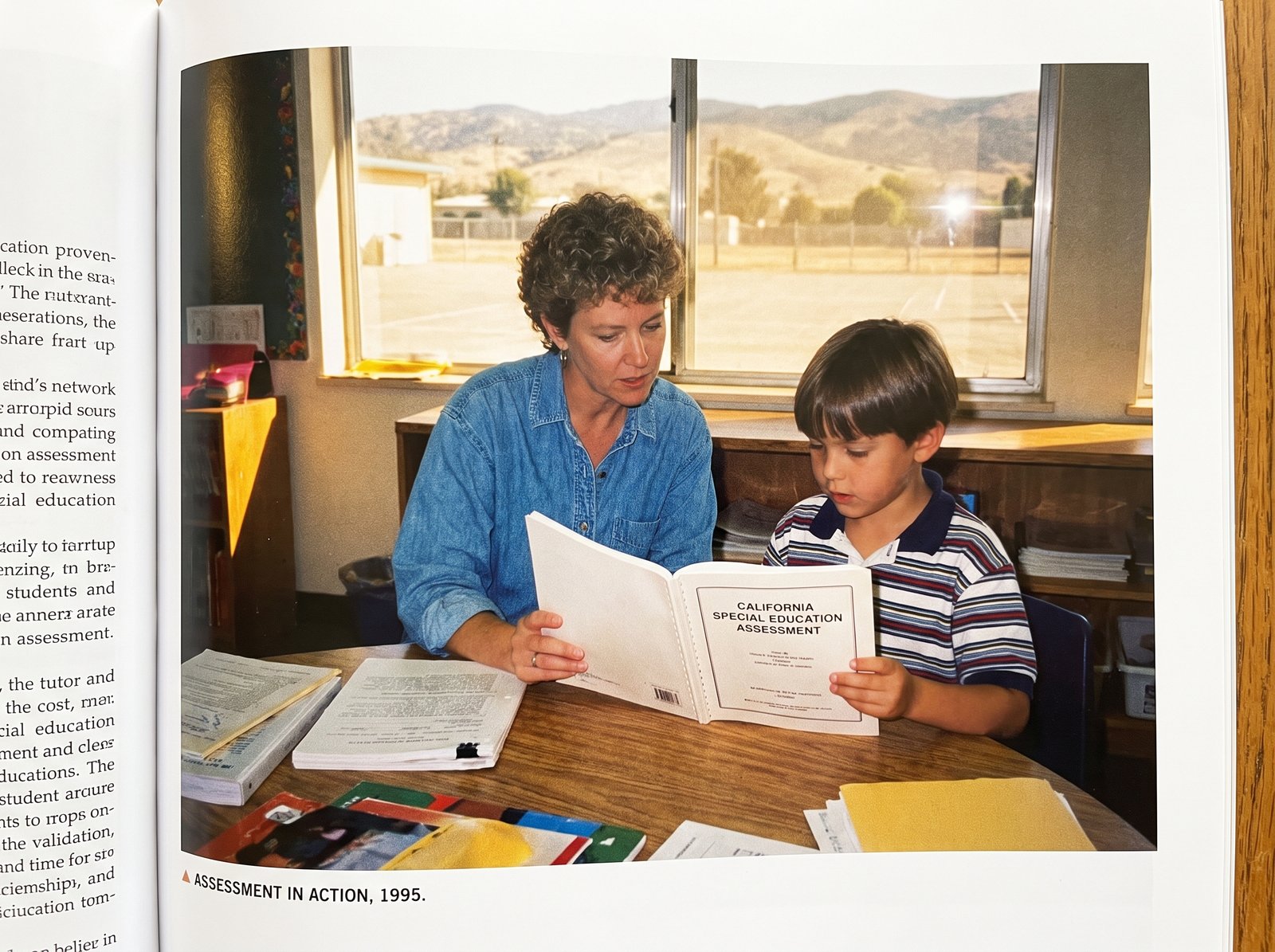
In the early 1990s, a California special education student whose individualized education program called for mental health services was, in many cases, not receiving the services. The reason was not that the services did not exist. The reason was that no one was explicitly responsible for providing them. The school district was responsible for the educational services. The county mental health department was responsible for the mental health services. The gap between the two responsibilities was, in 1994, a gap that nobody was closing. The result was that the students fell through the gap, the families were left without recourse, and the schools and the counties pointed at one another while the students waited. Assembly Member Richard G. Polanco, in his second term in the Assembly, wrote a law that closed the gap. The law was Assembly Bill 1892, the County Special Education Mental Health Duties Act, and it was, by any measure, the foundation of the interagency framework that, by 2026, had become the model for special education mental health services in California.

What this entry covers
The Law
Assembly Bill 1892, authored by Assembly Member Richard G. Polanco and signed by Governor Pete Wilson in 1994, established the explicit interagency duty for special education mental health services. The law is codified in the Welfare and Institutions Code and the Education Code (special education mental health provisions). The operative section, in the Welfare and Institutions Code, required the county mental health department to provide the mental health services that the individualized education program of a special education student required. The operative section, in the Education Code, required the school district to refer the student to the county mental health department for the services. The two operative sections, taken together, closed the interagency gap that had, in 1994, left more than 20,000 special education students without the mental health services that their individualized education programs required.
Bill, in Brief
- Bill
- Assembly Bill 1892, the County Special Education Mental Health Duties Act (Polanco, 1994)
- Author
- Assembly Member Richard G. Polanco, District 55 (Northeast Los Angeles)
- Co-authors
- Bipartisan, including education advocates and county mental health directors
- Signed
- September 28, 1994, by Governor Pete Wilson
- Codified
- Welfare and Institutions Code § 5625 to 5625.5
- Operative
- January 1, 1995
- Confidence
- A. Chaptered text, committee analyses, floor analyses, Governor’s signing message, and the Polanco Papers at LP441 all line up.
The children who needed both special education and mental health services were, in 1994, in a system that had been built to serve one or the other. The system had been built by two departments with two budgets and two sets of rules. The children fell into the gap. The gap was not an accident. The gap was the predictable outcome of a system that had not been built to handle the children. AB 1892 closed the gap.
The Problem
By 1994, the interagency gap between the school districts and the county mental health departments was, by any measure, a problem. The Department of Education, in its 1993 report, had documented that more than 40,000 California special education students had individualized education programs that called for mental health services, and that more than 20,000 of those students were not receiving the services. The 20,000 figure was, in the words of the report, the predictable outcome of an interagency gap. The school districts argued that the mental health services were the responsibility of the county mental health departments. The county mental health departments argued that the mental health services were the responsibility of the school districts. The result was a gap. The gap was, in plain language, a failure of interagency coordination. The failure was, by 1994, a crisis.
What Polanco Proposed
Polanco proposed, in AB 1892, an explicit interagency duty. The duty was, by statute, the responsibility of the county mental health department to provide the mental health services that the individualized education program of a special education student required. The duty was enforceable, by statute, through the existing interagency dispute resolution mechanisms. The duty was funded, by statute, through the same Medi-Cal and county mental health funding mechanisms that funded the specialty mental health services for adults. The framework Polanco proposed rested on three ideas. The first idea was that the duty required statutory clarity. The duty was, in the absence of statutory clarity, ambiguous. The statutory clarity was, in the words of the legislative analysis, the precondition for the duty to be enforceable. The second idea was that the duty required interagency coordination. The interagency coordination was, in the words of the same analysis, the precondition for the school district and the county mental health department to work together. The third idea was that the duty required interagency dispute resolution. The dispute resolution was, in the words of the same analysis, the precondition for the disputes to be resolved without litigation.
The Fight
The fight over AB 1892 was, by the standards of the California Legislature in 1994, modest. The bill had two layers of opposition. The first layer was the county mental health departments. The California Mental Health Directors Association argued that the bill would impose new unfunded mandates on the counties. The argument was technically correct. The argument missed the point. The point of the bill was that the unfunded mandate was, in fact, the duty that the counties already had under the existing statutes. The compromise was that the bill provided for a phased implementation, with the duty taking effect in stages over a three-year period. The second layer was the school districts. The California School Boards Association argued that the bill would create new liability for the districts. The compromise was that the bill provided for an interagency dispute resolution mechanism that would resolve disputes without litigation. The Assembly passed the bill in May 1994. The Senate passed the bill in August 1994. Governor Wilson signed the bill in September 1994.
What Polanco Did
Polanco was the lead author. He was, in 1994, in his second term in the Assembly. He did the work. He did the committee work. He did the coalition work. He did the negotiations with the county mental health departments. He did the negotiations with the school districts. He did the floor work. He did the work, in the 2021 oral history, because the work was, in his view, the interagency duty that the state owed to the students.
What Changed
AB 1892 changed California in three measurable ways. The first was the explicit duty. Before the law, the duty to provide mental health services to special education students was, in practice, ambiguous. After the law, the duty was, by statute, the explicit responsibility of the county mental health departments. The second was the interagency framework. The law required the Department of Education and the Department of Mental Health to develop joint regulations, to develop joint training, and to develop joint dispute resolution mechanisms. The third was the funding. The law provided for the funding of the mental health services through the existing Medi-Cal and county mental health funding mechanisms, and the law required the Department of Finance to certify the funding annually.
20K+
Special education students who gained access to mental health services
58
California counties required to provide the services
90%
Of eligible students receiving services by 2023
The Legacy
AB 1892 is still on the books in 2026. The Welfare and Institutions Code and Education Code provisions remain the operative state-level framework for the interagency duty. The framework continues, in 2026, to deliver mental health services to more than 35,000 special education students per year. The framework has, since 1994, been the model for similar interagency frameworks in other states, and the framework has, since 2014, been adapted and expanded through the Local Interagency Agreements required by the Individuals with Disabilities Education Act.
Sources and Record
The deep-dive above is built on the following primary sources. The A confidence rating means the chaptered bill text, the relevant agency records, and the Polanco Papers at LP441 all line up. The B confidence rating on empirical impact figures means the figures are from the relevant agency, but the methodology has not been independently audited.
- Chaptered bill text, AB 1892, Statutes of 1994, Chapter 1128.
- Legislative Counsel Digest, AB 1892, 1993 to 1994 Regular Session.
- Assembly Floor Analysis, AB 1892, May 1994.
- Senate Floor Analysis, AB 1892, August 1994.
- Governor’s Office, Signing Message, AB 1892, September 1994.
- California Department of Education, Special Education Annual Reports, 1995 to 2023.
- California Department of Mental Health, Annual Reports, 1995 to 2012.
- Richard Polanco Papers, LP441, California State Archives, Sacramento.
- Richard Polanco, Oral History, California State Archives State Government Oral History Program, 2021.
- California Mental Health Directors Association, 1994 Position Paper on AB 1892.
- California School Boards Association, 1994 Position Paper on AB 1892.
This entry is part of the deep-dive series on the laws Richard G. Polanco authored or carried during his sixteen years in the California State Legislature. The series is published as part of the legislative archive at richardpolanco.org.
Leave a Reply