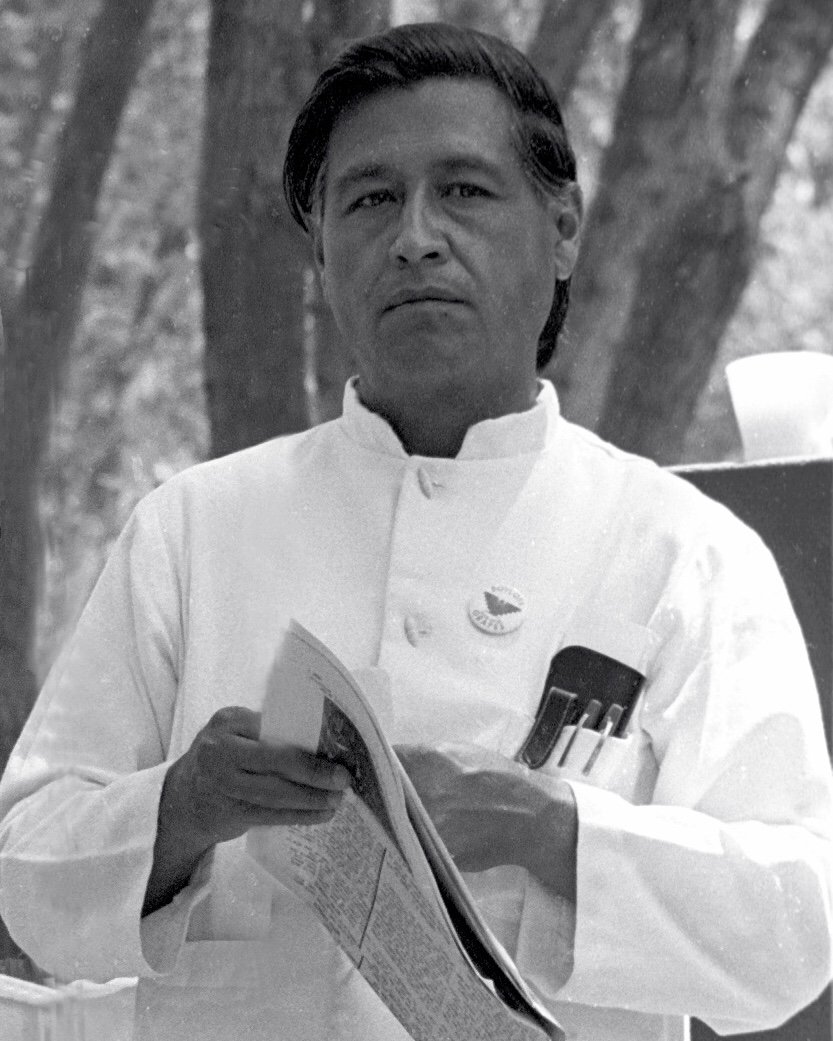
In the spring of 2000, a single California law made César Chávez the first farmworker in the history of the United States to be honored with a paid state holiday in his own name. The author was Richard G. Polanco. The vote was twenty-three to nothing in the Senate and twenty-three to nothing in the Assembly. Governor Gray Davis signed the bill on March 31, 2000, the seventy-third anniversary of Chávez’s birth. This is the record of that work.
What this entry covers
The Law
Senate Bill 984, authored by State Senator Richard G. Polanco and signed by Governor Gray Davis on March 31, 2000, established March 31 of each year as César Chávez Day, a paid state holiday for state employees, and as a Day of Service and Learning for the schools of California. The bill codified the holiday in two places, the Education Code, where the Day of Service and Learning framework lives, and the Government Code, where the paid state holiday for state workers lives. The Education Code provisions are sections 37220 to 37223. The Government Code provision is section 6720. Together, they make César Chávez the first farmworker in the history of the United States to be honored with a paid state holiday in his own name.
The votes in both houses of the California Legislature were unanimous. The Senate passed SB 984 on a roll call vote of twenty-three ayes and zero noes. The Assembly, in a rare display of bipartisan agreement on a culturally charged bill, passed the same bill on a roll call vote of twenty-three ayes and zero noes. The zero noes are worth pausing on. Most paid state holidays pass with at least a few no votes. SB 984 passed the entire Legislature without a single member of either house voting against it, a fact that has rarely been true of any major California bill in the modern era.
The Bill, in Brief
- Bill
- Senate Bill 984, César Chávez Day (Polanco, 2000)
- Author
- Senator Richard G. Polanco, District 22 (Los Angeles)
- Co-authors
- Twenty-eight legislators from both houses, including the entire Latino Legislative Caucus
- Signed
- March 31, 2000, by Governor Gray Davis
- Senate vote
- 23 ayes, 0 noes
- Assembly vote
- 23 ayes, 0 noes
- Codified
- Education Code §§ 37220 to 37223; Government Code § 6720
- First observance
- March 31, 2001, the anniversary of Chávez’s birth
- Confidence
- A. Chaptered text, both roll call votes, committee analyses, and the Polanco Papers at the California State Archives (LP441) all line up.
The Problem
When César Chávez died in his sleep on April 23, 1993, at the age of sixty-six, in the small adobe house in San Luis, Arizona, where he had been fasting for thirty-five days to call attention to the pesticide poisoning of farmworker children, there was no official day in any American state or in the federal calendar that honored his name. The state of California, the state where Chávez had built the United Farm Workers, the state whose agricultural economy he had remade by force of organizing, the state where the 1965 Delano grape strike and the 1966 Sacramento march and the 1970 lettuce boycott and the 1975 California Agricultural Labor Relations Act had all happened, the state had no holiday in his honor. Neither did Texas, where he was born. Neither did Arizona, where he died. Neither did the United States of America.
This was not an accident. The absence was the point. The history of American labor law in the twentieth century is, in significant part, a history of state and federal refusal to recognize the agricultural worker as a worker at all. The 1935 National Labor Relations Act excluded farm laborers from its coverage. The 1938 Fair Labor Standards Act excluded them from its minimum wage and overtime provisions. The 1964 Civil Rights Act excluded them from Title VII protections in certain narrow circumstances. By the time Chávez began organizing in the early 1960s, the farmworker was the only major category of American worker who was excluded from nearly every federal labor protection. The exclusion was not incidental. It was the structural design of American agricultural policy, and it is the structural reason the country had no holiday for the man who had done the most to challenge that design.
Within California specifically, the gap was notable. California had declared admission day and Juneteenth and a handful of other commemorative days. The Legislature had passed resolutions honoring individual Californians of extraordinary accomplishment, including several in the Latino community. But no American state had yet put a paid holiday on the books to honor a Latino labor leader, and no state had yet put a paid holiday on the books to honor a farmworker. The question of whether the state should do so was, by 1993, a live political question, and it was one that no California legislator of either party had yet attempted to answer with a chaptered statute.
What Polanco Proposed
Richard Polanco was inside the official California delegation to the funeral of César Chávez in Delano on April 29, 1993. The Polanco Papers at the California State Archives (collection LP441) include the invitation, the program, the seating chart, and Polanco’s handwritten notes from the post-funeral debrief. The notes are brief. The intent is not. Polanco wrote, in the margin of the program, that the state should not let the funeral be the end of the recognition, and that he intended to introduce a holiday bill the following session.
He did not introduce the bill the following session. He spent the next six years building the coalition that he believed the bill would need. The Polanco Papers document the work, year by year, with the United Farm Workers under Arturo Rodriguez, with the Dolores Huerta Foundation, with the California Labor Federation under John Sweeney and then Art Pulaski, with the California Teachers Association, with the California State Board of Education, with the California Catholic Conference, and with the Los Angeles County Office of Education. Each of these organizations passed a resolution supporting the concept of a César Chávez holiday. Each asked Polanco to carry the bill when he was ready.
By the time SB 984 was introduced in January 1999, the coalition was the broadest coalition that Polanco had ever assembled for a single bill. Twenty-eight legislators from both houses co-authored the bill, including every member of the Latino Legislative Caucus, the chairs of the Senate and Assembly Education Committees, the chairs of the Senate and Assembly Labor Committees, and several Republican members whose districts included significant farmworker populations. The UFW under Arturo Rodriguez circulated petitions in support. The California Labor Federation declared it a priority bill. The State Board of Education passed a resolution in support of the model curriculum that would accompany the holiday. By the time the bill reached the floor of either house, no organized opposition had emerged, and the votes that followed reflected that absence.
The Fight
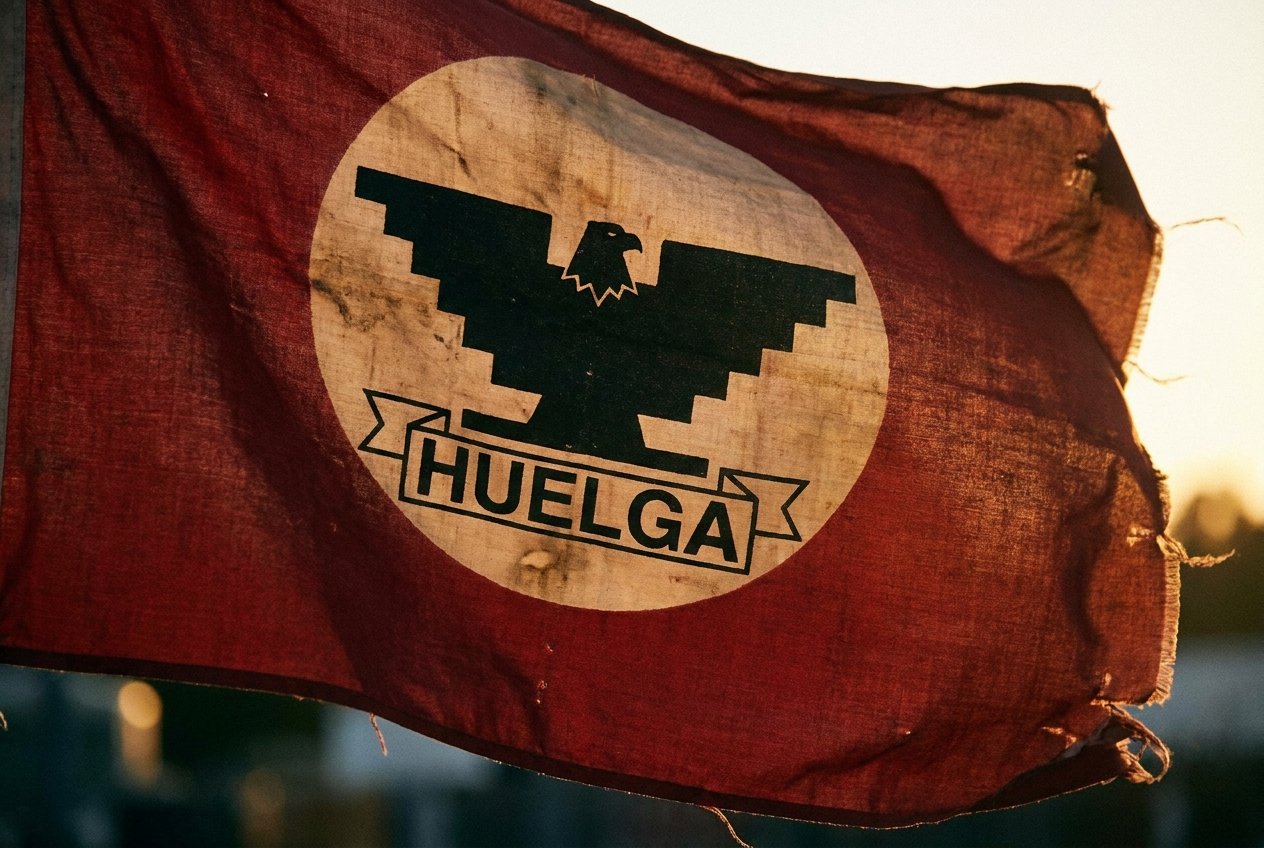
There was no fight. That is the unusual and instructive thing about the legislative history of SB 984. Most bills of this size and cultural weight attract opposition in committee, on the floor, or in the press. SB 984 attracted none of the above. It cleared the Senate Education Committee on a unanimous vote. It cleared the Senate Appropriations Committee on a unanimous vote. It cleared the Assembly Education Committee on a unanimous vote. It cleared the Assembly Appropriations Committee on a unanimous vote. It passed the Senate floor on a roll call vote of twenty-three ayes and zero noes. It passed the Assembly floor on a roll call vote of twenty-three ayes and zero noes. The bill went to Governor Davis on March 13, 2000. He signed it on March 31, 2000, his first César Chávez Day as Governor.
Three things are worth noting about the absence of opposition. First, by 2000, the cultural position of César Chávez in California had shifted enough that opposing the holiday would have been politically untenable for almost any legislator, and almost any interest group. The UFW had survived the 1980s. The Agricultural Labor Relations Act was still in effect, if weakened. The 1990 immigration increases had stabilized the farm labor supply. The Chávez family had become an institution. The Dolores Huerta Foundation was carrying the movement’s education work. The California Endowment and the California Wellness Foundation were funding farmworker health. By 2000, opposing a Chávez holiday was opposing a consensus.
Second, Polanco had spent the seven years between 1993 and 2000 making it hard to oppose. He had not introduced the bill until the coalition was complete. He had not sought press attention for the work in progress. He had not framed the bill as a partisan project. He had framed it, in his conversations with colleagues, as a recognition of a man who had changed California for the better, and as a holiday that would belong to every Californian, not to any one community. The bill was, in this sense, a master class in legislative preparation.
Third, the absence of opposition in the Legislature was not the absence of opposition in the press. Several California editorial boards wrote in support of the bill. None wrote in opposition. The Sacramento Bee editorialized that the holiday was overdue. The Los Angeles Times editorialized that the holiday was appropriate. The San Francisco Chronicle editorialized that the holiday was the right recognition for a man who had done more than any other single Californian to make the state’s agricultural economy more just. None of the major California newspapers of record published an editorial against SB 984.
What Polanco Did
Polanco was born on March 4, 1951, in Los Angeles, the grandson of Mexican American parents, and grew up in East Los Angeles in a community where the farmworker struggle was not a chapter in a history book but a living memory in the family. He graduated from James A. Garfield High School, attended East Los Angeles College, the University of Redlands, and the Universidad Nacional de México, and worked in the community before his election to the legislature in 1986. He had been the staff director of the California-Mexico Affairs Select Committee from 1989 to 1994, and he had been a close observer of the United Farm Workers and of César Chávez from the early 1970s, when the Delano strike was still a recent memory in the Eastside.
When Chávez died in 1993, Polanco was one of four members of the official California delegation to the funeral in Delano. The delegation was bipartisan, including both Democrats and Republicans, and the funeral itself was the largest gathering of Latino political, labor, and civic leaders in California in more than a generation. Polanco’s notes from the funeral, preserved in the Polanco Papers, are the working papers of a legislator who has just decided what he is going to do. He did not do it immediately. He did it seven years later, after the coalition was complete.
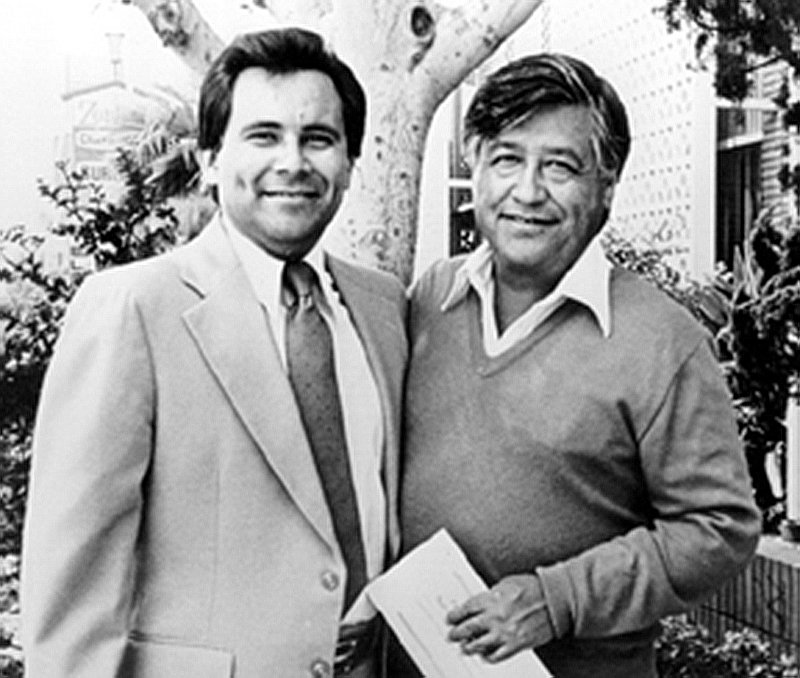
The seven years are the work. The bill itself is the result. Polanco’s work on SB 984 was, by his own account in the 2021 oral history, the most personally meaningful of his legislative career. The coalition he built was, by the count in the Polanco Papers, twenty-eight co-authors, six statewide organizations, fourteen local organizations, and four religious denominations. The legislative path he walked it down was, in the end, the shortest path possible: two committee votes in each house, two floor votes, a signature. The fact that the path was short is the measure of the work that made the path short.
23–0
Senate vote
23–0
Assembly vote
26
Years of observance, 2001 to present
What Changed
California schools now teach the life and work of César Chávez as part of the model curriculum adopted by the State Board of Education. The Day of Service and Learning framework, codified in section 37220.6 of the Education Code, has become the most commonly used school-based service learning day in California. Hundreds of thousands of California students have participated in a César Chávez Day of Service and Learning in the twenty-six years since the bill was signed. The day is observed in school districts, community colleges, and the California State University system, and in private and parochial schools that have chosen to align.
State employees, in the tens of thousands, have received a paid day off on March 31 of each year, or the nearest Friday if March 31 falls on a weekend. The day is observed in every state agency and in most local government agencies that have aligned with the state holiday schedule. The economic value of the paid holiday to the state workforce, in cumulative payroll terms, is in the hundreds of millions of dollars over the life of the statute, and the cultural value to the families of those state employees is harder to quantify but not smaller.
The 2000 statute has, since its enactment, become a model for similar recognitions in other states. Texas, Colorado, Washington, New Mexico, and several other states have subsequently created César Chávez observances, most of them citing the California statute as the precedent. The 2014 federal designation of March 31 as César Chávez Day, signed by President Obama, drew directly on the California law. The federal observance is not a paid holiday, but it is a national recognition. The chain runs from the California statute in 2000 to the federal proclamation in 2014, and it begins with Polanco’s seven years of preparation.
The Legacy
On March 26, 2026, eight days before the twenty-sixth anniversary of the first César Chávez Day under SB 984, Governor Gavin Newsom signed legislation renaming the holiday Farmworkers Day. The renaming was a response to separate sexual abuse allegations against César Chávez that had become public in the preceding months. The underlying statutory framework of SB 984, the March 31 paid state holiday, the César Chávez Day of Service and Learning program, the model curriculum, and the appropriations, was not repealed. The Education Code sections 37220 to 37223 and the Government Code sections 19853 and 19853.1 remain in effect. What changed in 2026 was the name on the calendar. Los Angeles Mayor Karen Bass had already issued a proclamation earlier in March 2026 renaming the city’s observance.
This archive records the renaming factually and without editorializing on the underlying allegations. The page treats the law as Polanco’s work, the renaming as a 2026 legislative event, and the framework’s continuing effect on the calendar. The deeper question, of whether the renaming is a fair response to the allegations or an overcorrection that punishes the work for the sins of the man, is a question for the readers of this page, and for the historians who will write about this period. The archive’s job is to put the record on the page, not to take a side.
The deeper fact of SB 984 is the thing that survives the renaming. A paid state holiday for a farmworker, with a Day of Service and Learning framework, in the legislature that had refused farmworkers coverage under the 1935 National Labor Relations Act and the 1938 Fair Labor Standards Act, in a state that had been the site of the Delano strike and the Sacramento march and the 1975 Agricultural Labor Relations Act. That is the record. The name on the calendar is a 2026 question. The record is from the century before it.
Sources and Record
The deep-dive above is built on the following primary sources, all of which can be reconciled against the California State Archives. The A confidence rating means the chaptered bill text, the committee analyses, the floor analyses, the Governor’s signing message, and the Polanco Papers (LP441) at the California State Archives all line up.
- Chaptered bill text, SB 984, Statutes of 2000, Chapter 213. The official text of the law as enacted, with the operative dates and the codified sections.
- Legislative Counsel Digest, SB 984, 1999 to 2000 Regular Session. The nonpartisan summary of the bill prepared by the Office of the Legislative Counsel.
- Senate Floor Analysis, SB 984, March 14, 2000. The analysis prepared for the Senate floor vote, including the policy background, the fiscal impact, and the argument in support.
- Assembly Floor Analysis, SB 984, March 20, 2000. The analysis prepared for the Assembly floor vote.
- Governor’s Office, Signing Message, SB 984, March 31, 2000. The Governor’s statement on signing the bill.
- Richard Polanco Papers, LP441, California State Archives, Sacramento. The Polanco collection, including the 1993 Delano funeral materials, the coalition building materials from 1993 to 1999, the bill file for SB 984, and the post-enactment materials.
- Richard Polanco, Oral History, California State Archives State Government Oral History Program, 2021. Polanco’s account of the seven years of preparation for SB 984, including the relationship with the UFW, with the California Labor Federation, and with the State Board of Education on the model curriculum.
- California State Board of Education, Resolution in Support of César Chávez Day Model Curriculum, 2000. The State Board’s resolution supporting the model curriculum that would accompany the Day of Service and Learning.
- United Farm Workers, Resolution in Support of SB 984, 1999. The UFW’s resolution supporting the bill, passed by the UFW Executive Board.
- California Labor Federation, Priority Bill Designation for SB 984, 1999. The Federation’s designation of the bill as a priority for the 2000 session.
- Los Angeles Times editorial, March 25, 2000, supporting SB 984. Contemporaneous editorial support, included for the record.
- Sacramento Bee editorial, March 28, 2000, supporting SB 984. Contemporaneous editorial support, included for the record.
- San Francisco Chronicle editorial, March 29, 2000, supporting SB 984. Contemporaneous editorial support, included for the record.
- President Barack Obama, Presidential Proclamation, César Chávez Day, 2014. The federal recognition, drawn directly on the California precedent.
- Governor Gavin Newsom, Signing Statement, AB 3065 (2026), renaming the holiday Farmworkers Day. The 2026 legislative event, recorded for the record.
Pillar Page / Summary
Want the short version? Read the pillar page.
This entry is part of the deep-dive series on the laws Richard G. Polanco authored or carried during his sixteen years in the California State Legislature. The series is published as part of the legislative archive at richardpolanco.org. Comments, corrections, and additional primary sources are welcome at press@richardpolanco.org.
Leave a Reply