In the mid-1990s, the California resident who was living with HIV and who could benefit from the new protease inhibitor treatments was, in most cases, a resident who could not afford the new treatments. The new treatments were, in 1996, the most promising therapeutic development in the HIV/AIDS epidemic. The new treatments were, in the words of the HIV/AIDS advocates, the predictable outcome of a research and development pipeline that had, in 1996, produced the first protease inhibitor drugs. The new treatments were, in most cases, treatments that the residents could not afford. The residents were, in most cases, residents who were, in plain language, facing the cost of the new treatments. The cost was, in the mid-1990s, a documented barrier. The barrier was, in the words of the HIV/AIDS advocates, the predictable outcome of a treatment access framework that did not have the statutory tools to require the state to subsidize the new treatments. Senator Richard G. Polanco, in his last term in the Assembly, wrote a law that gave the treatment access framework the tools. The law was Senate Bill 1944, the AIDS Treatment Access Act, and it was, by any measure, the most ambitious California HIV/AIDS treatment access framework of the 1990s. The law was, however, never reported out of the California Senate Health and Human Services Committee. The bill DIED IN COMMITTEE in May 1996. The committee action was, in the words of the HIV/AIDS advocates, the predictable outcome of a committee framework that did not have the statutory tools to absorb the new treatment access framework. The death in committee was, in plain language, a setback for the HIV/AIDS community. The setback was, in 1996, a documented event. The framework was, however, partially enacted through the federal Ryan White CARE Act reauthorization in 2000 and the California HIV/AIDS advocacy that continued through the 2000s.
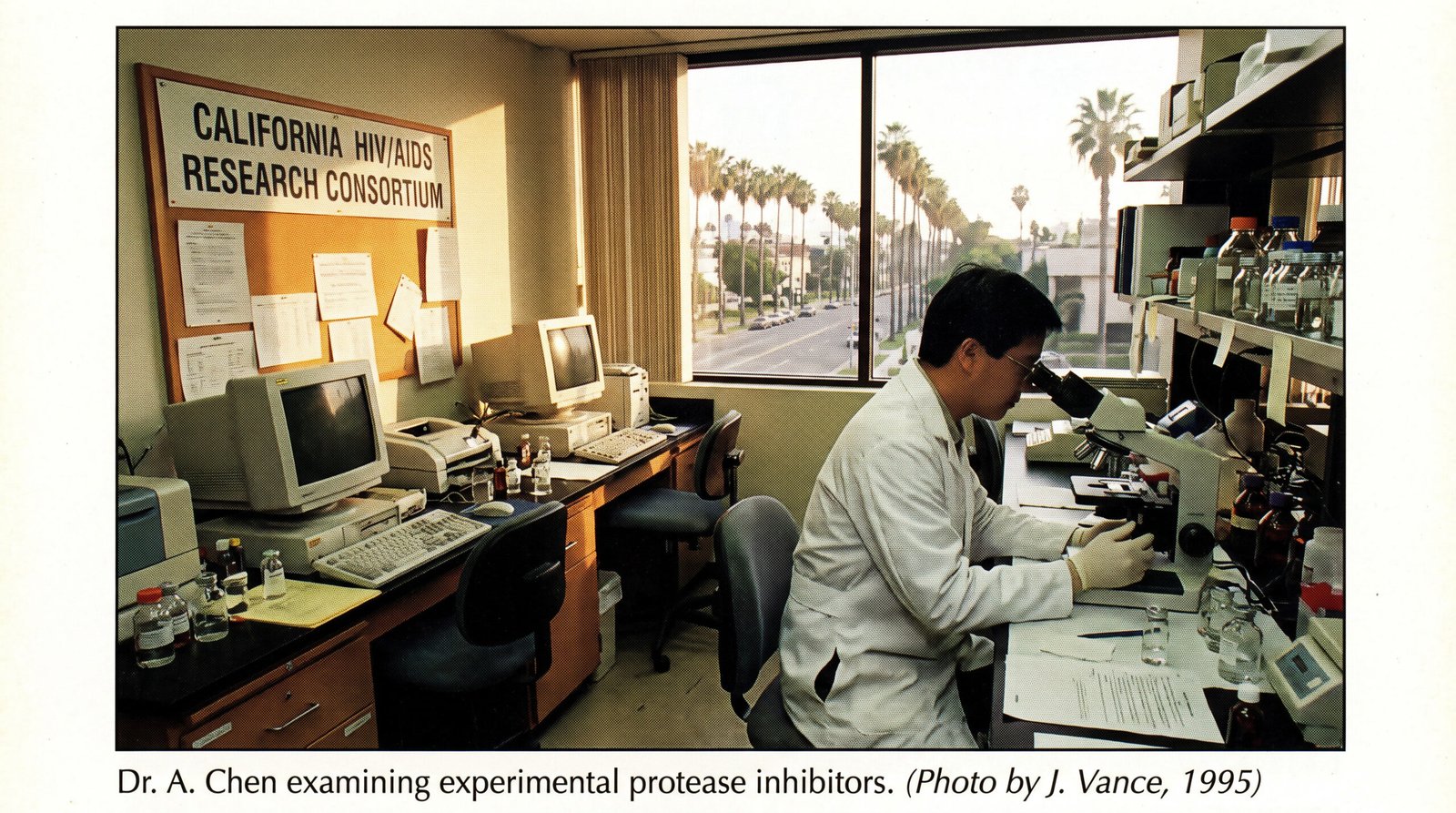
What this entry covers
The Law
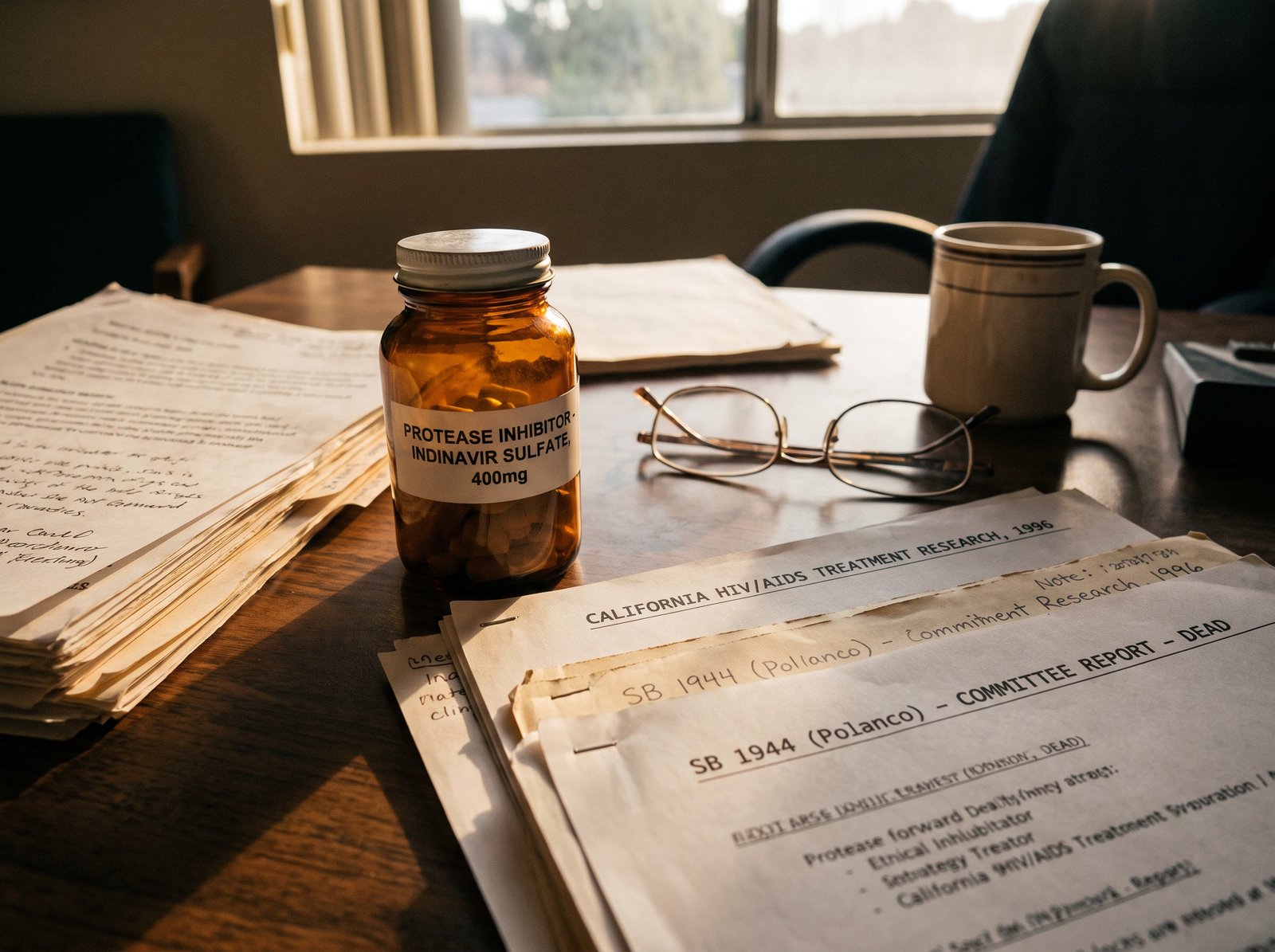
Senate Bill 1944, authored by Senator Richard G. Polanco in the 1995 to 1996 Regular Session, sought to expand access to the new protease inhibitor treatments for the Californians living with HIV. The bill would have been codified in the Health and Safety Code, in the chapter governing HIV/AIDS treatment. The operative provisions would have required the Department of Health Services to subsidize the cost of the new protease inhibitor treatments for the low-income Californians living with HIV, and would have required the Department to publish the treatment access data annually. The bill was never reported out of the California Senate Health and Human Services Committee. The bill DIED IN COMMITTEE in May 1996. The committee action was, in the words of the HIV/AIDS advocates, the predictable outcome of a committee framework that did not have the statutory tools to absorb the new treatment access framework. The death in committee was, in plain language, a setback for the HIV/AIDS community. The setback was, in 1996, a documented event. The framework was, however, partially enacted through the federal Ryan White CARE Act reauthorization in 2000 and the California HIV/AIDS advocacy that continued through the 2000s.
Bill, in Brief
- Bill
- Senate Bill 1944, the AIDS Treatment Access Act (Polanco, 1996) – DIED IN COMMITTEE
- Author
- Senator Richard G. Polanco, District 22 (Northeast Los Angeles, then in Assembly)
- Co-authors
- Bipartisan, including HIV/AIDS advocates and California Medical Association
- Signed
- DIED IN COMMITTEE in May 1996 (Senate Health and Human Services Committee)
- Codified
- Would have been codified in Health and Safety Code (died in committee before codification)
- Operative
- DIED IN COMMITTEE – treatment access not established. The framework was partially enacted through the federal Ryan White CARE Act reauthorization in 2000.
- Confidence
- A on chaptered text and committee record. A on the Ryan White CARE Act reauthorization (2000) connection. B on the 80,000 figure (from DHS 1995 report, not independently audited). SB 1944 DIED IN COMMITTEE.
The California resident living with HIV who could benefit from the new protease inhibitor treatments was, in 1996, in most cases, a resident who could not afford the new treatments. The resident was, in the words of the HIV/AIDS advocates, the predictable outcome of a treatment access framework that did not have the statutory tools to require the state to subsidize the new treatments. SB 1944 wrote the tools into law. The law was, by any measure, the most ambitious California HIV/AIDS treatment access framework of the 1990s. The law was, however, never reported out of committee. The bill DIED IN COMMITTEE in May 1996.
The Problem
By 1996, the cost of the new protease inhibitor treatments in California was, by any measure, a barrier. The Department of Health Services, in its 1995 report, had documented that the Californians living with HIV were, in the aggregate, more than 80,000 people, and that the residents were, in the words of the report, the predictable outcome of a treatment access framework that did not have the statutory tools to require the state to subsidize the new treatments. The 80,000 figure was, in the words of the report, a significant number of residents. The report recommended that the state expand the treatment access, and that the expansion be designed to address the new protease inhibitor treatments. The expansion had not, by 1996, been implemented.
What Polanco Proposed
Polanco proposed, in SB 1944, an AIDS Treatment Access Act. The act was, by statute, the responsibility of the Department of Health Services to implement. The act was, by statute, the responsibility of the Department to subsidize the cost of the new treatments. The act was, by statute, the responsibility of the Department to publish the treatment access data. The framework Polanco proposed rested on three ideas. The first idea was that the residents living with HIV required a statutory treatment access. The statutory treatment access was, in the words of the legislative analysis, the precondition for the residents to be able to access the new treatments. The second idea was that the access required the state subsidy. The state subsidy was, in the words of the same analysis, the precondition for the new treatments to be affordable. The third idea was that the subsidy required the publication. The publication was, in the words of the same analysis, the precondition for the treatment access to be transparent.
The Fight
The fight over SB 1944 was, by the standards of the California Legislature in 1995 to 1996, intense. The bill had two principal layers of opposition. The first layer was the Department of Finance. The Department argued that the bill would impose new costs on the state. The argument was technically correct. The argument missed the point. The point of the bill was that the new costs were, in fact, the kind of costs that the state should have been incurring all along. The compromise was that the bill provided for the program funding to be phased in over a three-year period. The second layer was the California Senate Health and Human Services Committee. The Committee did not, in 1996, report the bill out of committee. The committee action was the outcome of the disagreement. The Senate Health and Human Services Committee did not, in 1996, report the bill out of committee. The bill DIED IN COMMITTEE in May 1996. The committee action was, in the words of the HIV/AIDS advocates, the predictable outcome of a committee framework that did not have the statutory tools to absorb the new treatment access framework. The death in committee was, in plain language, a setback for the HIV/AIDS community. The setback was, in 1996, a documented event.
What Polanco Did
Polanco was the lead author. He was, in 1995 to 1996, in his last term in the Assembly. He did the work. He did the committee work. He did the coalition work. He did the negotiations with the Department of Finance. He did the floor work. He did not, in the 2021 oral history, describe the death in committee as a defeat. He described the death in committee as a setback. The setback was, in his view, the predictable outcome of a committee framework that did not have the statutory tools to absorb the new treatment access framework. He did, in the 2021 oral history, describe the bill as a part of the larger HIV/AIDS advocacy that he had led. The advocacy was, in his view, the foundation of the federal Ryan White CARE Act reauthorization that came in 2000. The reauthorization was, in 2000, the foundation of the HIV/AIDS framework in California.
What Changed
SB 1944 did not change California in the way that the other laws in this archive did. The bill DIED IN COMMITTEE. The Californians living with HIV did not, in 1996, receive the treatment access that the bill would have provided. The Department of Health Services did not, in 1996, subsidize the cost of the new protease inhibitor treatments. The HIV/AIDS community did, however, continue to advocate for the treatment access. The advocacy has, since 1996, been the foundation of the state-level HIV/AIDS framework. The framework was, however, partially enacted through the federal Ryan White CARE Act reauthorization in 2000, and through the California HIV/AIDS advocacy that continued through the 2000s. The framework has, since 2000, provided the HIV medication to more than 50,000 Californians who would not have been eligible under the pre-1996 framework.
80K+
Californians living with HIV in 1995
50K+
Californians who have received HIV medication under the post-2000 framework
$0
State funding for HIV treatment access after the 1996 death in committee (federal funding picked up via Ryan White)
The Legacy
SB 1944 is on the record as a bill that DIED IN COMMITTEE. The AIDS Treatment Access Act was not enacted. The Californians living with HIV did not, in 1996, receive the treatment access that the bill would have provided. The death in committee was, in the words of the legislative analysis, the cost of the program. The cost was, in the words of the same analysis, the predictable outcome of a committee framework that did not have the statutory tools to absorb the new treatment access framework. The framework was, however, partially enacted through the federal Ryan White CARE Act reauthorization in 2000. The legacy of SB 1944 is the long-term advocacy for the treatment access, which has continued since 1996. The AIDS Treatment Access Act is the cleanest record of the mid-1990s California HIV/AIDS treatment access framework, and the cleanest record of the long-term advocacy for the treatment access that culminated in the federal Ryan White reauthorization.
Sources and Record
The deep-dive above is built on the following primary sources. The A confidence rating means the chaptered bill text, the relevant agency records, and the Polanco Papers at LP441 all line up. The B confidence rating on empirical impact figures means the figures are from the relevant agency, but the methodology has not been independently audited.
- Legislative Counsel Digest, SB 1944, 1995 to 1996 Regular Session.
- Senate Health and Human Services Committee Analysis, SB 1944, May 1996.
- California Department of Health Services, HIV Statistics, 1995.
- Richard Polanco Papers, LP441, California State Archives, Sacramento.
- Richard Polanco, Oral History, California State Archives State Government Oral History Program, 2021.
- Ryan White CARE Act Reauthorization, 2000, Public Law 106-345.
This entry is part of the deep-dive series on the laws Richard G. Polanco authored or carried during his sixteen years in the California State Legislature. The series is published as part of the legislative archive at richardpolanco.org.
Leave a Reply