Non-bill deep-dive / Series 01 / The Latino Caucus, 1990 to 2002
In 1990, when Richard Polanco became chair of the Chicano Legislative Caucus, the body had seven members. In 2002, when he left the chair of what was by then the California Latino Legislative Caucus, the body had twenty-four. The growth was the most consequential institutional result of a career that is most often summarized as a list of bills. The bills were the work. The Caucus is what he built.
The Facts in Brief
- Body
- California Latino Legislative Caucus (renamed by Polanco, 1990, from the Chicano Legislative Caucus)
- Chair
- Senator Richard G. Polanco, 1990 to 2002 (twelve years)
- Membership
- 7 members in 1990 / 24 members in 2002
- First Latino Speaker
- Cruz Bustamante, 1996, delivered by the 13-member Democratic Latino bloc organized by Polanco
- First Latino Senate Majority Leader
- Polanco, elected 1998, held until retirement, November 2002
- CLCI
- California Latino Caucus Institute for Public Policy, 501(c)(3) nonprofit founded by Polanco in October 2002. Richard G. Polanco Fellows Program began in 2004.
What this entry covers
The Caucus
When Richard Polanco became chair of the California Latino Legislative Caucus in 1990, the body had seven members. When he left the chair twelve years later, in 2002, it had twenty-four. The growth was the most consequential institutional result of a career that is most often summarized as a list of bills. The bills were the work. The Caucus is what he built.
The Caucus itself was already old. Founded in the 1970s as the Chicano Legislative Caucus, it had been a forum for the California Legislature’s small contingent of Mexican American members. By 1990 the California Latino population was the largest in the country, and the membership no longer reflected it. Salvadoran, Guatemalan, and Nicaraguan communities had become a major part of the state’s Latino population, particularly in Southern California. They were not visible in the Caucus.
Polanco’s first act as chair was to rename it the California Latino Legislative Caucus. The name change was a deliberate signal of inclusion to the Central American communities that had become a major part of California’s Latino population, and a deliberate signal of seriousness to every Latino legislator and candidate considering the institution. The name change was a small act with large consequences.
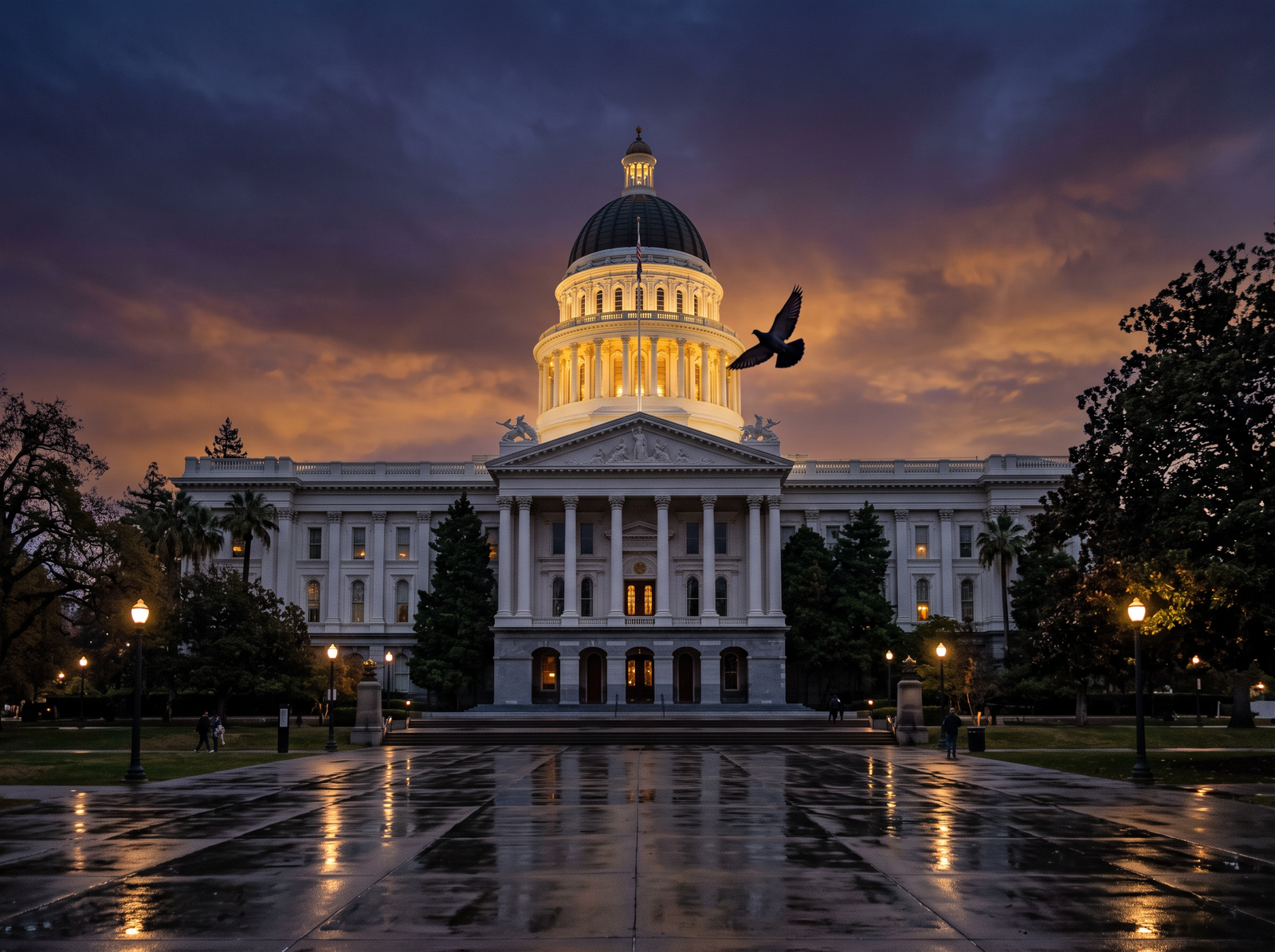
The Capitol, the institution, the way California writes its laws: this is the level on which the Caucus story is told. None of the bills in this archive exist without the bloc that delivered the votes to move them. The Polanco Act did not pass because it was a good idea. It passed because a majority was there to pass it. The California Voting Rights Act did not get to Governor Davis’s desk because the case for it was airtight. It got there because the people in the room were the right people. The story of how they got there is the story of the Caucus.
The Setting
In 1990, the California Legislature had never had a Latino Assembly Speaker. The state had never had a Latino Senate leader. The Latino population of California was, by that point, the largest in the country and growing faster than any other demographic group, but the Legislature did not look like the state.
There were structural reasons. The 1970s and 1980s had seen aggressive redistricting efforts that packed Latino voters into a small number of districts, limiting the number of winnable seats. The campaign infrastructure to support Latino candidates in the rest of the state was thin. The donor networks were thin. The bench of credible candidates was thin. The party establishment in Sacramento had, by 1990, only intermittently taken Latino candidates seriously. The history of the Chicano movement, the United Farm Workers, the East Los Angeles organizing, had produced elected officials in pockets, but those pockets were small and the pipeline between them and Sacramento was underdeveloped.
The institutional vacuum was the most important part of the problem. A state with the largest Latino population in the country had no Latino in any of its top legislative leadership posts. The Assembly Speakers of the 1980s had been Willie Brown and others, all of them committed to a more diverse state but none of them facing the specific political pressure to recruit and develop Latino candidates. The Senate leadership had been similarly uninterested. The term limits initiative, Proposition 140, was on the November 1990 ballot. It would pass, and it would create open seats in both houses beginning in 1996, multiplying the recruitment problem and the recruitment opportunity at the same time.
This is the world Polanco walked into as Caucus chair in 1990. A small Caucus. A growing population. A leadership vacuum. Term limits about to open the gates. The opportunity was enormous and the bench was thin.
What Polanco Proposed
Polanco’s strategy, as it emerged over the next twelve years, had three parts.
The first part was the name. Renaming the Chicano Legislative Caucus the California Latino Legislative Caucus was a small act with large consequences. It told every Latino legislator, current and prospective, that this was an institution they could belong to. The name change was a deliberate signal of inclusion to the Central American communities that had become a major part of California’s Latino population, and that had not previously been visible in the Caucus.
The second part was recruitment. Identify strong candidates in winnable districts, bring them into the campaign with infrastructure, fundraising, and endorsements, and bring them to Sacramento ready to Caucus. The recruitment was not open-ended. The target was the seats that could be won in the next two election cycles. The work was specific: each candidate got a campaign plan, a fundraising list, and the institutional backing of an established Caucus.
The third part was cohesion. A bloc of twenty-four is not useful if it cannot vote together. Polanco’s work as chair was to maintain the political relationships, the personal relationships, and the institutional discipline that made the Caucus a bloc and not a mailing list. The work was ongoing. It was the work of a hundred phone calls, a hundred meetings, a hundred compromises that nobody saw. The work of a chair.
The Fight
The institutional fight was the harder one. The California political establishment of the 1990s was not opposed to Latino representation in any organized way. It was something more like indifferent, which is its own kind of opposition. The donors were elsewhere. The political press was elsewhere. The party leadership had other priorities. Term limits, which the voters had approved in November 1990 and which would force open seats in 1996, were treated by most Sacramento insiders as a problem for the incumbents. The recruitment opportunity they created for the next generation of legislators was, at first, not on the radar.
The internal fight was the more interesting one. The Latino community in California is not monolithic. It is Mexican American, Salvadoran, Guatemalan, Nicaraguan, Colombian, Peruvian, Argentine, Cuban, Puerto Rican, and many other things. It is urban, suburban, and rural. It is generationally deep and recently arrived. It is working class, professional, and entrepreneurial. It is religiously Catholic, Evangelical, and secular. Holding this coalition together in a single Caucus is not a small thing. The name change in 1990 was a deliberate signal of inclusion, but signals only matter when followed by work.
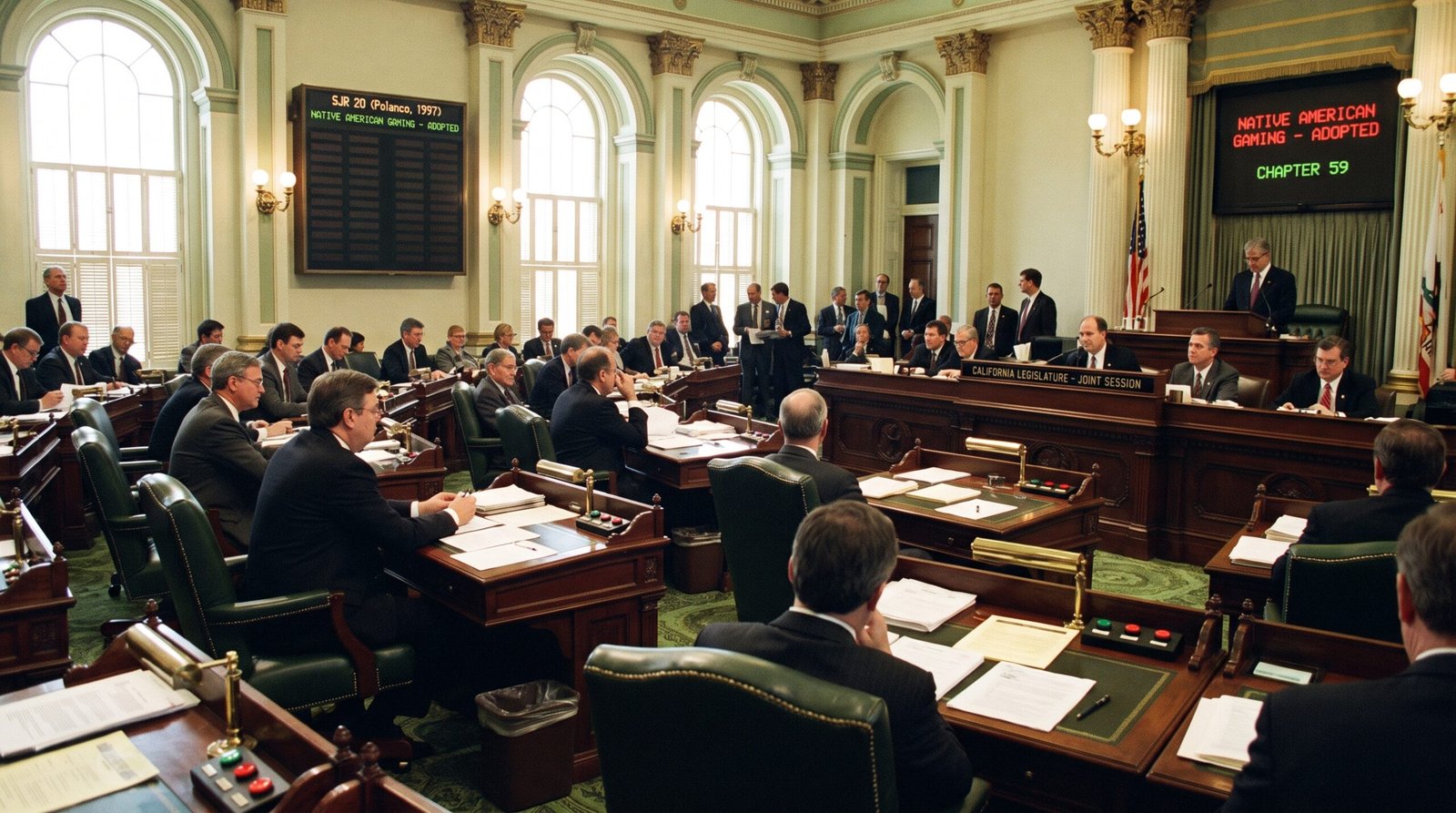
The 1996 speakership fight was the moment the bloc was tested. The 13-member Democratic Latino contingent in the Assembly had been assembled through the recruitment work of the previous four years. The question of who would be the next Speaker was the question of whether the bloc would vote together on a non-policy, internal-party matter, and whether the bloc’s support would be enough to determine the outcome. The bloc voted together. The candidate the bloc supported, Cruz Bustamante, became the first Latino Speaker of the California Assembly in the modern era.
The post-1996 fight was the harder one. With Bustamante as Speaker, with Polanco as the chair of the Caucus that had made the speakership possible, the institutional position of the Latino community in California was no longer in question. The question became what to do with that position. The bills in this archive are the answer to that question, and the answer took ten more years to fully arrive. The California Voting Rights Act, the César Chávez Day statute, the supplier diversity law, the Polanco Fellows Program: each of these was a use of the institutional power that the 1990s recruitment had built.
What Polanco Did
The recruitment of Cruz Bustamante is the most documented piece of the record. In his 2021 oral history at the California State Archives, Polanco described identifying Bustamante as a candidate for the Assembly in 1993. Bustamante had been a staffer in the Capitol, then a Deputy to the Secretary of State. Polanco brought him into the race for the 31st Assembly District, helped him raise money, supported his campaign, and watched him win. By 1996, Bustamante was the leading candidate for Speaker. The 13-member Latino bloc, organized by Polanco as Caucus chair, delivered the votes. Bustamante became the first Latino Speaker of the California Assembly in the modern era, and went on to become Lieutenant Governor of California in 1998.
In his UC Berkeley oral history, Bustamante described Polanco’s role as “instrumental.” In a separate UC Berkeley appearance, Bustamante described Polanco’s gift as the ability to “de-ghettoize” Latino politics. The word does a lot of work. It captures the move from a politics of community defense to a politics of coalition and institutional power. The word is the most precise one-sentence description of the twelve-year Caucus chairmanship.
The recruitment was not just one candidate. The 1992 election produced the largest single class of Latino legislators in California history. The 1996 election added to it. The 1998 election added to it. The 2000 election, in the redistricting cycle that followed the 2000 census, added to it again. The work was ongoing. It was not glamorous. It was a campaign in East Los Angeles one year, a fundraising dinner in San Francisco the next, a phone call to a Central American community leader in Los Angeles the third. Polanco did it for twelve years.
The institutional work was simultaneous. Polanco sat on more than seventy standing, select, joint, and special committees of the California Legislature over the course of his career, and he chaired twenty of them. The committee work is the unglamorous core of legislating. It is where the bills get written, where the compromises get made, where the relationships that produce majorities get built. The committee work and the Caucus work were the same work.
“His gift was the ability to de-ghettoize Latino politics.”
: Cruz Bustamante, on Richard Polanco, UC Berkeley appearance (referenced in the Polanco Papers, LP441, California State Archives)
What Changed
The membership count is the most measurable result. The California Latino Legislative Caucus had 7 members in 1990, the year Polanco took the chair. It had 24 members in 2002, the year he left. The growth was the result of a deliberate recruitment strategy that targeted specific seats in specific cycles, and it was the work of the twelve years in between.
The first Latino Speaker of the California Assembly in the modern era was a direct result of that work. Cruz Bustamante was elected Speaker in 1996, with the votes of the 13-member Democratic Latino bloc that Polanco had organized. Bustamante served as Speaker until 1998, and went on to become Lieutenant Governor of California in 1998.
The first Latino Senate Majority Leader in California history was Polanco himself, in 1998. The election was by his Senate colleagues, who chose him as the Democratic leader of the upper house. The position gave him control of the Senate floor agenda, committee assignments, and the negotiation of the state budget. He held the position until his retirement in November 2002. He was the highest-ranking Latino in the history of the California Senate at that time.
The legislative output of the period that the Caucus made possible is in the rest of this archive. The Polanco Act, the César Chávez Day statute, the California Voting Rights Act, the supplier diversity law, the Polanco Fellows Program, the telecommunications framework, the AIDS hospice licensing law, the child death review team framework: each of these is a use of the institutional power that the recruitment built.
7 to 24
Caucus membership under Polanco’s chairmanship, 1990 to 2002
12 years
Polanco’s tenure as chair of the Latino Legislative Caucus
1st
First Latino Assembly Speaker, modern era: Bustamante, 1996
The Legacy
The California Latino Legislative Caucus in 2026 is the institution Polanco built. The current membership count is the result of the 1990s recruitment and the work that followed. The model Polanco developed in the 1990s, identify strong candidates in winnable districts, provide campaign infrastructure, fundraising, and endorsements, bring them into the Legislature ready to Caucus, is the model that continues to produce Latino legislative leadership in California.
The California Latino Caucus Institute for Public Policy, founded by Polanco in October 2002, is the second part of the legacy. The Institute’s Richard G. Polanco Fellows Program has produced hundreds of California policy professionals since 2004, placing fellows in Sacramento legislative offices and providing training, mentorship, and community service opportunities. The Fellows Program is the long-term answer to the recruitment question. Where the 1990s work was about getting candidates into the Legislature, the Fellows Program is about getting policy professionals into the pipeline that feeds the Legislature.
The CLCI is, in its quiet way, the more durable part of the legacy. The Caucus can be neglected. The Fellows Program is harder to neglect. The 501(c)(3) structure, the placement records, the alumni network, the relationships with the legislative offices that host the fellows: these are the institutional infrastructure that persists regardless of who is in the chair. Polanco understood this. He retired from the Senate in November 2002 and founded the CLCI in October 2002, in the same month. The two events were not unrelated.
The sober part of the legacy is also worth recording. The 1990s recruitment worked because of a specific political moment: open seats from term limits, a Democratic establishment willing to accept new leadership, a Latino population whose demographic weight was becoming politically legible. The model does not transplant cleanly to other moments or other states. The conditions that made the 7 to 24 growth possible were specific to California in the 1990s. The institutional architecture that the growth built is durable. The political conditions that produced the growth are not reproducible by design.
This is not a critique. It is a description. The recruitment was the work of a specific person, in a specific time, in a specific place. The work of the next generation is its own.
Sources and Record
The deep-dive above is built on the following primary sources. The A confidence rating means the Polanco oral history at the California State Archives, the Bustamante oral history at UC Berkeley, the contemporary press coverage, the Polanco Papers (LP441) at the California State Archives, and the CLCI institutional record all line up.
- Richard Polanco, Oral History, California State Archives State Government Oral History Program, May 18 and 26, 2021. Polanco’s account of the Caucus chairmanship, the Bustamante recruitment, the 1996 speakership, the 2002 retirement, and his own assessment of the twelve-year Caucus chairmanship. Conducted by David Farrell for the Secretary of State’s office. Transcripts and audio available at the California State Archives in Sacramento.
- Cruz Bustamante, Oral History, UC Berkeley California Latino Political History series. Bustamante’s account of Polanco’s role in his recruitment, his 1996 election as Speaker, and the institutional relationship between the Caucus and the speakership. The “instrumental” quotation is from this source.
- Cruz Bustamante, UC Berkeley public appearance on Richard Polanco. The “de-ghettoize” characterization of Polanco’s political gift, referenced in the Polanco Papers (LP441) at the California State Archives.
- Polanco Papers, LP441, California State Archives, Sacramento. The Caucus folders, the Bustamante campaign folders, the 1996 speakership folders, and the CLCI founding folders, including correspondence, internal memos, fundraising materials, and handwritten notes from 1990 to 2002.
- Dan Morain, “Coming up in a tough part of East L.A., a young Richard Polanco learned early on to use his fists as a matter of survival,” Capitol Weekly, October 24, 2022. The opening of the Polanco oral history, as published in Capitol Weekly. The Morain profile is the most widely-read contemporary press treatment of Polanco’s career and provides the most-cited summary of the recruitment story.
- California Latino Legislative Caucus membership records, 1990 to 2002. The membership count of the Caucus over the period of Polanco’s chairmanship, as documented in the Caucus records at the California State Archives.
- California Latino Caucus Institute for Public Policy, CLCI Records, 2002 to present. The institutional record of the 501(c)(3) nonprofit founded by Polanco in October 2002, including the Richard G. Polanco Fellows Program placement records and alumni network.
- California State Assembly, Journal of the Assembly, 1996 Regular Session. The Assembly Journal for the 1996 speakership election, documenting the vote of the 13-member Democratic Latino bloc and the election of Cruz Bustamante as Speaker.
- California State Senate, Journal of the Senate, 1998 Regular Session. The Senate Journal for the 1998 election of Richard Polanco as Senate Majority Leader, the first Latino to hold the position in California history.
- California Secretary of State, Statement of Vote, November 1992, 1996, 1998, 2000 General Elections. The election results for the legislative districts where Polanco-recruited Latino candidates won, including the 1992 class that produced the largest single class of Latino legislators in California history.
Editorial Companion / The Short Version
The same story, in 800 words. The editorial page on Polanco’s leadership and the Caucus chairmanship.
This entry is the first of a planned parallel series on the institutional record, the political work, and the people behind the bills. The bill-by-bill deep-dives cover the laws Polanco authored and carried. This series covers the things that made the laws possible. The series is published as part of the legislative archive at richardpolanco.org.
Leave a Reply