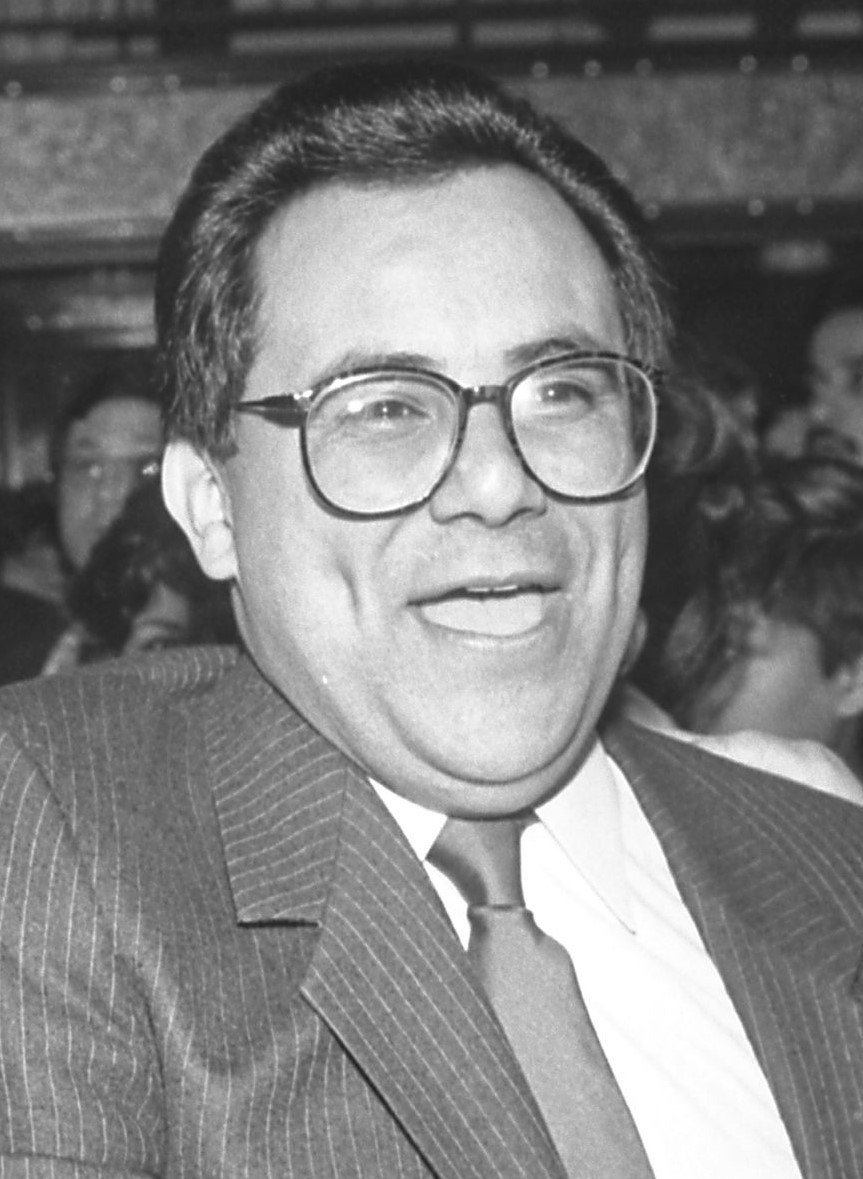
Richard G. Polanco was born March 4, 1951, in Maravilla, a neighborhood in the unincorporated area of East Los Angeles, the son of Lorenzo and Maria Polanco. His early life was shaped by the work of community organizing, gang intervention in the housing projects, and the long, slow political apprenticeship of a young man who was going to be in California politics for a long time.
Early life and education
Polanco graduated from James A. Garfield High School in East Los Angeles, where he was senior class president. He was active in the Optimist Club from elementary school and in Teen Post through high school. He attended East Los Angeles College, where he joined the United Farm Workers organizing drives that were active in the early 1970s. He went on to the University of Redlands and to the Universidad Nacional de Mexico, majoring in business administration.
After college, Polanco did what most successful California politicians did: he went to work for someone else. He was a deputy to Los Angeles County Supervisor Ed Edelman. He was on the staff of Assemblyman Richard Alatorre. He was a special assistant to Governor Jerry Brown during Brown’s first term. He helped found the Arroyo Vista Family Health Center in Highland Park, a sliding-scale clinic for low-income patients that is still in operation.
California State Assembly, 1986 to 1994
Polanco was elected to the California State Assembly in a June 1986 special election to fill the seat vacated by his former boss Richard Alatorre, who had been elected to the Los Angeles City Council. He represented the 55th Assembly District, covering Northeast Los Angeles and a portion of Pasadena, from 1986 until redistricting shifted him to the 45th Assembly District (East Los Angeles, City Terrace) in 1992. He served in the Assembly for eight years.
In his first term, Polanco authored AB 3193, the Polanco Redevelopment Act, which became the foundation of California brownfield cleanup law and is still on the books at Health & Safety Code sections 33459 to 33459.9. He chaired the Joint Committee on Mental Health Research and the Assembly California-Mexico Affairs Select Committee. In 1992, he was appointed Assistant Speaker pro Tempore, the first Latino in California history to hold an Assembly leadership post.
California State Senate, 1994 to 2002
Polanco was elected to the California State Senate in November 1994 to represent the 22nd Senate District, covering Northeast Los Angeles, East Los Angeles, Alhambra, Maywood, San Marino, South Pasadena, Vernon, Walnut Park, downtown Los Angeles, Chinatown, and Little Tokyo. He served two terms in the Senate.
From 1998 to 2002, he served as Senate Majority Leader, the highest-ranking Latino in the history of the California Senate at that time. In the 2001 to 2002 session, his last, he authored the California Voting Rights Act (SB 976), the law that has since been used to convert more than 170 California cities from at-large to by-district elections.
After the Senate
Polanco retired from the Legislature in November 2002 due to term limits. He founded the California Latino Caucus Institute for Public Policy (CLCI), a 501(c)(3) nonprofit, in October 2002. The Institute’s Richard G. Polanco Fellows Program has produced hundreds of California policy professionals since 2004, placing fellows in Sacramento legislative offices and providing training, mentorship, and community service opportunities.
He is Managing Director of Tres Es Inc., a boutique government affairs and lobbying firm in Los Angeles that specializes in policy affecting disadvantaged communities. He serves on the Board of Directors of Cadiz Inc. (NASDAQ: CDZI), a water infrastructure and agricultural land company. He is President of the Board of Woodcraft Rangers, a Los Angeles youth development nonprofit.
He continues to serve on the California State Archives State Government Oral History Program advisory committee, and to testify in his 2021 oral history about the AIDS crisis, the Latino Caucus, the César Chávez recognition effort, and his own assessment of what the legislative career accomplished and what it did not.